


If you are flying in for a week on the water, the first real decision is not the boat. It is your arrival rhythm. Get that right at Thessaloniki Airport and the rest of Halkidiki feels easy.
I have picked up crews from SKG for years, for day trips and for multi-day charters, and the same patterns repeat. A little planning around traffic, wind, and daylight makes the transfer south smoother, and you start your holiday with your shoulders down.
SKG the airport for Chalkidiki
Chalkidiki does not have a commercial airport of its own and never really needed one. Instead, the region has always relied on Thessaloniki International Airport “Macedonia”, commonly known by its airport code SKG. For decades, this airport has functioned as the natural gateway not only to Chalkidiki but to most of northern Greece. For many travellers, arriving at SKG already feels like arriving close enough to the sea, even before the actual drive south begins.
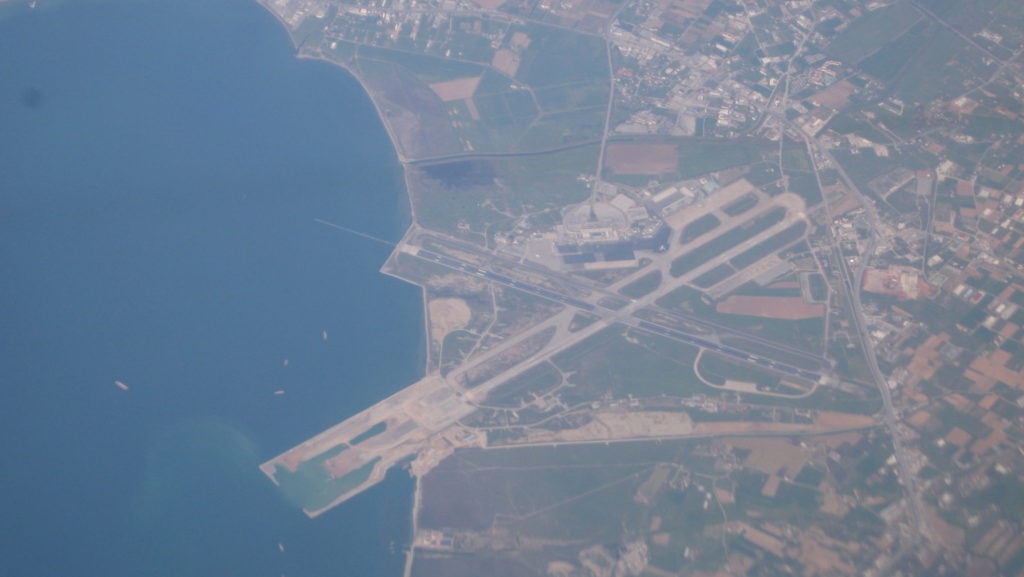
SKG is located on the southeastern edge of Thessaloniki, directly next to the Thermaic Gulf. The sea is only a few hundred metres from the runway, and on clear days arriving aircraft descend with views over water, city and distant mountains. This coastal location is one of the reasons the airport has always been important for the wider region, but also why its expansion took many years to complete.
In recent years, the airport underwent a major upgrade. Runways were extended and the terminal expanded, allowing larger aircraft to land safely and improving passenger flow. Wide-body aircraft that previously faced restrictions can now operate normally. For travellers heading to Halkidiki, this mostly means more direct international flights during the summer season and fewer technical stopovers than in the past.
One practical detail from a skipper’s side. If you are landing in the afternoon and you want to be on the boat the same day, keep your expectations realistic. Summer traffic toward Kassandra can stack up fast, and check-in for a yacht is never just “jump on and go”. It is bags, briefing, groceries, and a first swim if you are lucky. Plan like a local, not like a brochure.
TELEPHONE CENTER: +302310985000
The name “Halkidiki Airport” is often used informally, especially online, but officially the airport remains Thessaloniki International Airport “Macedonia”. This makes sense geographically. The airport sits almost exactly between Thessaloniki and the beginning of Halkidiki, and for most destinations on Kassandra the drive south starts immediately after leaving the airport area.
Distance matters here. From SKG, Nea Moudania, often considered the gateway town to Halkidiki, is about 50 kilometres away. Depending on traffic and season, this usually takes around one hour. Sithonia is further and travel times increase accordingly, often approaching two hours or more for the eastern side. These are realistic times, not optimistic brochure estimates, and they matter when planning arrival and departure days.
If you are heading to the Athos Coast (the third peninsula), remember that you do not drive into Mount Athos itself. You drive along the mainland side facing it. Transfers can be longer than people expect, and if you are meeting a boat in that area, you want slack in the schedule. A small delay in baggage claim can turn into a late-night arrival at the marina, and nobody enjoys doing a safety briefing at midnight.
Inside the airport, facilities are modern and generally functional. There are cafés, casual food options, duty free shops, ATMs, car rental desks and free Wi-Fi throughout the terminal. During high summer the airport can feel busy and slightly compressed, especially on weekends when charter flights arrive almost simultaneously. Outside peak season, movement is calmer and the space feels easier to navigate.
The airport serves both domestic and international flights. Year-round connections link Thessaloniki with Athens and several Greek islands. Seasonally, direct flights connect SKG with many European cities, especially from central and eastern Europe. For Halkidiki, this seasonal rhythm has shaped tourism patterns for decades, long before low-cost airlines existed.
Getting from the airport to Halkidiki is straightforward in theory, but choices depend on budget, patience and destination. Taxis wait outside arrivals at all hours. Car rentals operate directly inside the terminal. Public transport exists, though it requires some planning and time. Each option has its place, and none are particularly unusual by European standards
One more thing that catches people out. On big Greek holiday weekends the roads can feel like a funnel. If your trip is around Orthodox Easter, check the dates early and expect heavier movement.
Sun, Apr 12 2026
The same goes for the Holy Spirit holiday, when locals also head to the sea.
Monday, June 1 2026
Direct flight connections to Thessaloniki International Airport (SKG)
https://www.flightconnections.com/flights-from-thessaloniki-skg
Arrival timing for boat trips
If you are coming for a day cruise, the most comfortable pattern is landing the day before and sleeping near the sea. Thessaloniki is great, but if your boat departs from Halkidiki early, staying closer to the peninsula saves you a very early wake-up and a bit of stress. If you are coming for a multi-day charter, landing earlier in the day gives you time for provisioning and a calm first night onboard.
Timetables, opening hours and routes can change without notice. Always double-check locally before you travel.
My transfer tips from SKG to Halkidiki
- Keep buffer time on Fridays and Sundays in July and August. Those are classic changeover days and the ring roads can crawl.
- If you rent a car, check where you will park at your accommodation or marina. Some waterfront areas are tight, and you do not want a parking hunt with luggage.
- Pack a light “first hour” bag with swimwear, charger, and meds. If checked luggage is delayed, your first day is still ok.
- If you are meeting a skipper, send your landing time and a real-time location once you are on the road. It saves a lot of phone calls.
Useful official sources before you fly
For airport updates and passenger information, the official site is the best place to start: Thessaloniki Airport (SKG) official website. For weather, especially if you are planning to be on the water the same day, I often check the HNMS forecast and so do many local captains: Hellenic National Meteorological Service.
Thessaloniki
Thessaloniki is Greece’s second largest city and one of the oldest continuously inhabited urban centres in Europe. Its metropolitan population exceeds 1.2 million people. Founded in the Hellenistic period, the city has lived through Roman, Byzantine, Ottoman and modern Greek eras without interruption. This layered history is still visible today, sometimes clearly, sometimes only if you know where to look.
For travellers heading to Halkidiki, Thessaloniki often plays a secondary role, but it should not. The city has a strong commercial centre, a long waterfront promenade, museums, markets and neighbourhoods with very different atmospheres. Many visitors choose to spend a night or two here either before heading south or on their return, especially if flight times are inconvenient.
If you have half a day, the waterfront walk is the easiest win. You get the sea breeze, café life, and a sense of the city without needing a plan. For a quick official overview of sights and practical info, the municipality’s visitor pages are useful: Municipality of Thessaloniki. And if you like archaeology and you are travelling outside peak beach hours, the city museums are genuinely worth it.
Thessaloniki also explains why Halkidiki developed the way it did. The city functioned for centuries as the economic and administrative centre of the region. Roads, ports and later airports were planned with Thessaloniki as the reference point. Even today, most services for Halkidiki still route through the city in one way or another.
Public transportation from Thessaloniki Airport (SKG) to Halkidiki
Reaching Halkidiki by public transport requires one intermediate step. You first need to get to the KTEL Chalkidikis bus station, which is located west of the airport area, roughly 9.5 kilometres away.
The simplest solution is to take a taxi from the airport directly to the KTEL station. Taxis are regulated, available around the clock and generally reliable. Free Now, formerly known as Taxi Beat, is the most widely used taxi app in Greece and works well in Thessaloniki. It allows card payments and fare estimates, which many travellers find reassuring.
Using local buses is possible and inexpensive, but it takes longer. From the airport you take bus number 79 (Airport – IKEA). From there you change to 36 (Voulgari – KTEL Chalkidikis). The total fare is low, but luggage and traffic can make the journey feel long. Single fare is €0,60, but timetables can change slightly depending on season.
From the KTEL Chalkidikis station, buses depart regularly toward all major destinations in Halkidiki. During summer season, departures are frequent, often hourly. The buses are clean, air-conditioned and safe, though not fast. They follow normal roads and are affected by traffic like everything else.
Car hire companies at Thessaloniki Airport
Car rental is one of the most popular ways to reach Halkidiki. Almost all major international and local rental companies operate directly at the airport. This includes Sixt, Europcar, Hertz, as well as several Greek companies. Booking in advance is strongly advised during summer months, as availability fluctuates quickly and prices rise close to arrival dates.
Driving in Halkidiki is generally straightforward. Roads are paved and signage is clear. Traffic increases significantly in July and August, especially on Fridays and Sundays. Maps and navigation apps help, but some delays are simply part of the seasonal rhythm.
From a skipper’s point of view, a rental car is great if you want freedom to explore beaches and tavernas inland. If your main goal is sea time, sometimes it is simpler to arrange a direct transfer to the marina and leave the driving to someone else. You arrive, you step onboard, you start the holiday. Simple as that, realy.
If you’d like to explore the coast, ask us about day trips at sea and sailing boat options.
From the airport to the marina
Most yacht departures for Kassandra and Sithonia are from the west side of the peninsula or from the broader Thessaloniki area, depending on the boat and the plan. The exact marina matters because it changes your transfer time a lot. When guests tell me “Halkidiki marina” it can mean a dozen different places.
If you are booking a boat with us, send your flight number and preferred departure day and we will suggest the most sensible meeting point for your route and weather window.
Not sure where to start? Contact our local travel agency for friendly, personalised advice, seasonal offers and travel options.
send us an email at booking@charterayacht.gr
call us: +306980700070
send a message via WhatsApp
call or text us on Viber
send a message via Messenger
Don’t forget to mention:
- Number of persons, possible dates
- The hotel you’ll be staying
- The activity you are interested in
What to do once you reach Halkidiki by road
Even if you are here for boating, do not skip the land part. Halkidiki is not just beaches. It is pine forest down to the water, small chapels, and quiet inland villages where lunch runs long.
On Kassandra, the feel is lively in summer, with more beach bars and late dinners. On Sithonia, it is usually calmer and greener, with more little coves and a slower pace. The Athos Coast has its own atmosphere, facing the monastic peninsula across the water. From the sea, that view can be unforgettable on a clear morning.
Seasonal feel on the water
July and August bring the warmest water and the biggest crowds. Ports fill up, and popular anchorages get busy by midday. June and September are my sweet spots for clarity and comfort. The sea is still warm, the light is softer, and you can find space in bays without feeling rushed.
Wind matters. In summer you often get a light to moderate sea breeze that builds through the afternoon. Great for sailing when it is steady, a bit choppy for small kids if you are far from shelter. That is why we plan routes with protected options, especially for day trips.
Sea and outdoor activities depend on the weather and your own fitness level. Always follow local safety advice and skipper instructions.
Lost and found
Swissport: +302310478932
Olympic Airlines: +302310408477, +302310985324
Aegean Airlines: +302310476058, +302310985323
Goldair Handling: +302310489066
Austrian Airlines: +302310471220
Information desk
The airport information desk is located on the ground floor near international arrivals. Telephone: +302310473212
Airport Parking
The airport operates East and West car parks with a total capacity of around 1470 spaces. There are also designated spaces for travellers with disabilities. Parking availability varies strongly by season, especially during peak summer weekends. For updated information: +302310985341
Transportation
Bus number 78 connects the airport with Thessaloniki city centre approximately every 45 minutes. Journey time is around 45 minutes depending on traffic. Taxi fare from the airport to the city centre usually ranges between 12 and 15 euros.
Radiotaxi services include:
+302310550500, +302310214900, +302310546522, +302310551525, +302310866866, +302310525000
Hellenic Civil Aviation Authority
TELEPHONE: +302108916000
E-MAIL:
FAX: +302108947101
Information for Russian travellers visiting Halkidiki in 2026
Travel conditions for Russian citizens wishing to visit Greece have changed significantly in recent years. Direct flights between Russia and Greece have been suspended, and travellers now need to route through third countries. This adds time and cost, but does not make travel impossible.
Common transit hubs include Yerevan in Armenia, Istanbul in Turkey, and Belgrade in Serbia. All three offer regular connections to Thessaloniki. Airlines and routes change often, so travellers should check directly with carriers rather than relying on outdated information. Flexibility is essential here.
Greek visa procedures for Russian citizens continue to operate through official visa centres. Applications follow the standard Schengen process. Despite rumours, visas are generally issued normally when documentation is complete. Processing times can vary, but there is no blanket suspension of tourist visas.
Because travel routes often involve multiple flights and airlines, comprehensive travel insurance is strongly recommended. Flight schedules can change at short notice, and indirect travel increases exposure to delays. Staying informed and planning with margin helps avoid unnecessary stress
Sea time: diving and snorkeling once you arrive
A lot of guests ask me where the water is clearest. In general, early summer and September are excellent, and sheltered bays on Sithonia often stay glassy in the morning. If you are into diving or you want a proper introduction to local underwater life, it is worth speaking with specialists who know the sites and conditions day by day. A good starting point is portoscuba.com, especially if you want to combine a boat day with a structured dive plan.
Who this route suits
- Families who want an easy arrival and short transfer to beaches and calm bays.
- Couples who like a night in Thessaloniki before heading south for sea days.
- Groups planning a yacht week who need reliable logistics for different flight times.
- Nature lovers aiming for quieter shoulder-season sailing and clear water.
Airfields
In addition to Thessaloniki International Airport, Halkidiki also has a small certified airfield used mainly for ultralight aviation.
PREL Wings Ltd is the oldest ultralight aircraft flight school in Greece, founded in 1992. Its facilities are located near the 30th kilometre of the Thessaloniki – Nea Moudania highway, close to Tsantalis Winery. The airfield is officially certified by the Greek Aviation Authority.
Telephone: +302399051031
Mobile: +306972446046
The airfield operates a runway of approximately 600 metres, suitable for ultralight aircraft. It is not intended for commercial aviation, but for training, recreational flying and private use. The surrounding landscape is open and relatively flat, offering good visibility and safe operating conditions.
For pilots, flying over Halkidiki gives a clear understanding of the region’s geography. The three peninsulas become immediately obvious from the air. Distances that feel long on the road suddenly make sense when seen from above. Coastlines, forests and settlements appear as connected patterns rather than isolated points.
Training is available for beginners as well as experienced pilots. For some visitors, this is their first experience of Halkidiki from the air. It is a quieter, slower form of aviation, far removed from commercial airports, and it fits the character of the region surprisingly well.
If you want your first day to be sea, not logistics, tell us your dates and where you want to sleep on the first night. We will match the right departure point and the right style of boat for your crew.
send us an email at booking@charterayacht.gr
call us: +306980700070
send a message via WhatsApp
call or text us on Viber
send a message via Messenger
Don’t forget to mention:
- Number of persons, possible dates
- The hotel you’ll be staying
- The activity you are interested in
Our local team of skippers, travel agents and scuba instructors with over 20 years of experience in Halkidiki is here to help you.