


Booking information for CharterAyacht
Most guests who come sailing with us in Halkidiki want the same thing. Clear info, no surprises, and a trip that feels easy from the first message to the last swim. Below is how we run our charters day by day on the water, with a few local tips that save time and stress.
We sail around the three “legs” of Halkidiki in Northern Greece, just southeast of Thessaloniki. Depending on the plan, we may stay in the sheltered gulfs between Kassandra and Sithonia, head down the Sithonia coast, or point the bow toward the Athos area where the scenery gets wilder and the distances get longer. If you want to read up on the region, the official tourism page is a good start: Visit Greece, Halkidiki.
General information for yacht vacations
All our yachts are open-water sailing yachts maintained and captained by their highly experienced owners. Every yacht features:
- A minimum of 3 double cabins
- A restroom (head) with hot water and a shower
- A fully equipped galley (kitchen) with cookware and utensils
- A diesel engine to keep you moving even when there is no wind
- A small inflatable dinghy with a motor
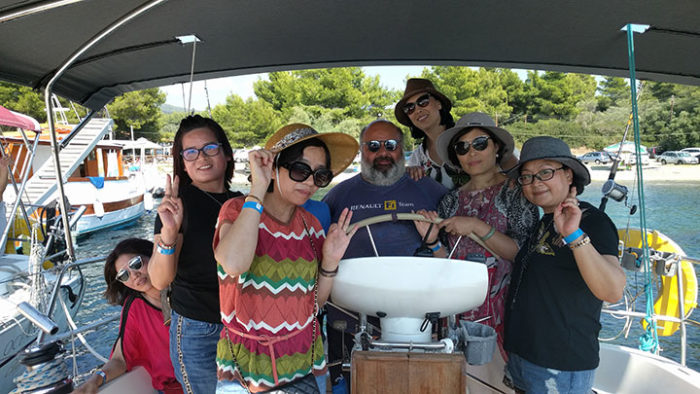
- A Bimini top for shade in the cockpit area
- Cushions for the cockpit seats
- All necessary navigation and safety equipment (which undergoes rigorous annual inspections)
- 12V car-style outlets for mobile device chargers
- Sheets, pillowcases, and towels (provided for charters lasting more than 3 days)
On a typical Halkidiki route, you will spend most of your time in the cockpit and on deck, not inside the cabins. That is why shade, a good dinghy, and a clean deck matter more than people expect. In July and August the sun is strong and the heat sits on the water, so the Bimini and cockpit cushions are not “extras”, they are what makes the day comfortable.
A quick note on electricity and charging. On a sailing yacht the power is limited, so we ask guests to charge phones and cameras in a sensible way, especially at night. If you have medical devices that need charging, tell us early so we can plan it properly.
Your captain (skipper) is there to navigate the boat, handle the sailing, and make sure you are safe and having a great time—not to cook or clean. They may also ask for your help from time to time.
That “help” is usually simple. Holding a line for 20 seconds, passing a fender, or keeping an eye on a child while we dock. If you want to learn, I am happy to show you the basics of trimming a sail or reading the wind on the water. If you want to do nothing at all, that is also fine, just tell me so I know what kind of pace you prefer.
Safety comes first on every trip. We brief you before we leave, and we keep it practical, not a lecture. Where to sit when we tack, how to move on deck, what to do if someone drops a phone or a hat in the sea. Also, no jumping into unknown water near rocks or in ports, even if it looks calm.
Sea and outdoor activities depend on the weather and your own fitness level. Always follow local safety advice and skipper instructions.
Don’t forget to pack:
- A swimsuit
- Sunglasses
- A hat (and a spare)
- A beach towel
- Sunscreen
A few more things that make life easier on board in Halkidiki. Soft bags, not hard suitcases. Light shoes with a non-marking sole for the deck. A thin jacket for the evening, even in summer, because after sunset the breeze can feel cool when you are still a bit wet.
If you are sensitive to seasickness, bring what works for you and take it early, not when you already feel bad. The waters here are often kind, especially inside the Toroneos and Singitikos Gulfs, but wind against current can still make a short chop. It happens, and it is normal.
How to reach Halkidiki and your departure port
Most guests fly into Thessaloniki Airport (SKG), then drive south into Halkidiki. Kassandra and Sithonia are both reachable by road, and in high season you should expect traffic around the main junctions and beach towns. If you are coming from Thessaloniki city, allow extra time on Fridays and Sundays, it can get a bit crazy.
If you want official local info for the wider area, Thessaloniki tourism has useful background: thessaloniki.travel. For weather planning, I always recommend checking a reliable marine forecast close to your dates, like the HNMS site: Hellenic National Meteorological Service.
What to do on a yacht vacation here
The simple answer is swim, sail, eat well, repeat. The better answer is that Halkidiki lets you mix easy days with a bit of exploration. Calm morning sails, long stops in turquoise water, and evenings in a small harbor for a walk and a proper meal. If you dive or snorkel, the water clarity is usually best in late spring and early summer, and again in September when the sea is still warm but the crowds are lower.
For guests who like underwater time, we often coordinate with local professionals depending on the area and conditions. If you are looking for scuba options and general dive info around Halkidiki, have a look at portoscuba.com and tell us what you have in mind. We will keep it realistic with the route and weather.
Seasonal feel, winds, and crowds
May and June are my favorite months for relaxed sailing. The sea is fresh at first, then warms up, and the anchor spots feel spacious. July and August bring the big family holidays, busy roads, and full tavernas near popular beaches. It is still beautiful, you just need earlier starts and a skipper who knows where to hide when an anchorage fills up.
September is a sweet spot. Warm water, less noise, and sunsets that feel slower. October can still be great for experienced travelers, but we plan more conservatively because weather can change faster.
Booking procedure
Naturally, the earlier you make a reservation, the bigger the discount we can offer you. After you contact us, we will send you a quote via email. If you choose to accept it, we will put a 7-day hold on your requested dates. During this time, you will need to transfer 50% of the agreed amount to our bank account (or pay via PayPal or credit card). Once received, we will confirm your booking. If, in the meantime, we have another customer ready to book those exact dates, we will ask you to either complete your transfer by the next day or release the hold. You can also request an additional 7-day extension if needed. The remaining balance must be paid no later than 20 days before your charter begins. We will need the full name, address, ID or passport number, and phone number of the person or company making the payment (as well as a VAT number if you are an EU resident). We also need the names, addresses, and passport or ID numbers of everyone who will be on board. This ensures we have all the necessary paperwork ready for your arrival. Before leaving the port, you will sign the charter agreement, which we will submit to the Coast Guard along with a passenger and crew list, as required by Greek law.
If you are booking during Greek holiday weeks, do it early. Around Orthodox Easter dates
Sun, Apr 12 2026
and the Holy Spirit holidayMonday, June 1 2026
, marinas and roads get busier and the best boats go first. It is not just tourists, it is locals moving around too, so the whole rhythm changes for a few days.After your booking is confirmed, we will also ask about the human side of the trip. Who sleeps where, who gets seasick, who loves early mornings, who wants quiet coves, who prefers a lively harbor. These details matter more than people think, and they help the skipper build a route that fits your group instead of forcing you into a generic plan.
Start times, meeting point, and provisioning
We usually meet at the boat in the departure port, do a short briefing, stow luggage, and then head out when everyone is ready and the conditions make sense. If you want to start very early or arrive late, tell us in advance so we can plan it with the marina rules and daylight. Some ports are easy for parking, others are tighter in high season, so arriving with a bit of buffer time saves nerves.
Timetables, opening hours and routes can change without notice. Always double-check locally before you travel.
For multi-day trips, most groups like to do a simple first-day shop for water, snacks, fruit, and breakfast basics. We can suggest what to buy and how much, based on your route and how often you want to eat ashore. If you have allergies or food restrictions, mention them early. It is not a problem, we just need to know.
Who this kind of charter suits
Families love the swim stops and the short hops between anchorages, especially on calmer routes inside the gulfs. Couples usually go for sunsets at anchor and quiet mornings with coffee in the cockpit. Groups of friends like a mix, one night in a harbor for dinner and a walk, then a night at anchor under the stars. Older travelers often prefer steadier pacing and comfortable stops, and we plan with that in mind, no rush.
If someone in your group has limited mobility, tell us honestly. We will explain what is realistic on a sailing yacht, and we will choose the right boat and the right plan. Some days are super easy, some docks are not. Better to talk about it now than pretend it is fine and suffer later.
If you want to talk through dates, ports, and what kind of boat fits your group, send a message and we will set it up properly.
Not sure where to start? Contact our local travel agency for friendly, personalised advice, seasonal offers and travel options.
call us: +306980700070
send a message via WhatsApp
call or text us on Viber
send a message via Messenger
Don’t forget to mention:
- Number of persons, possible dates
- The hotel you’ll be staying
- The activity you are interested in
Changes to the itinerary
Our suggested tour and vacation itineraries are fully customizable. If the weather isn’t what we expected, your captain will suggest alternative routes to ensure you have a smooth and safe trip. Depending on your group’s mood, you can also choose to skip the crowded tourist spots and spend more time exploring quiet, unspoiled destinations.
This is where local experience really pays off. In Halkidiki, a forecast can look fine and then a thermal breeze builds in the afternoon, especially in the hotter months. Sometimes we flip the day. Sail early, swim and relax when the wind is up, then move again later if it calms. Other times we stay put because the anchorage is perfect and nobody wants to leave. That is a good day too.
If you are aiming for the Athos side, we keep it respectful and within the legal navigation rules. You can enjoy the coastline views from the sea, and it is one of the most dramatic parts of the region. For background on the area, there is a straightforward reference here: Mount Athos (Wikipedia). Conditions can be more exposed there, so we only go when the weather window is right and your group is comfortable with longer legs.
A few practical route ideas (without locking you in)
If you want an easy, family-friendly feel, we usually focus on shorter distances with plenty of swim stops and time at anchor. If you want more sailing time, we plan longer crossings and pick anchorages that are comfortable in the expected wind direction. If you want a food-focused trip, we include harbors where you can step off the boat and eat well without a long walk in the heat. None of this is fixed. It is just how we shape the days so they feel natural.
Local crew, local habits
We are not a call center far away from the sea. We are here, we sail here, and we know what a harbor looks like at 18:30 in August. That local reality is what keeps your vacation smooth.
Our local team of skippers, travel agents and scuba instructors with over 20 years of experience in Halkidiki is here to help you.
If a sailing day sounds like your kind of holiday, ask us about day trips and multi-day routes around Halkidiki. We will tell you what fits your dates and your crew, and what to avoid so you do not waste time.
If you’d like to explore the coast, ask us about day trips at sea and sailing boat options.