


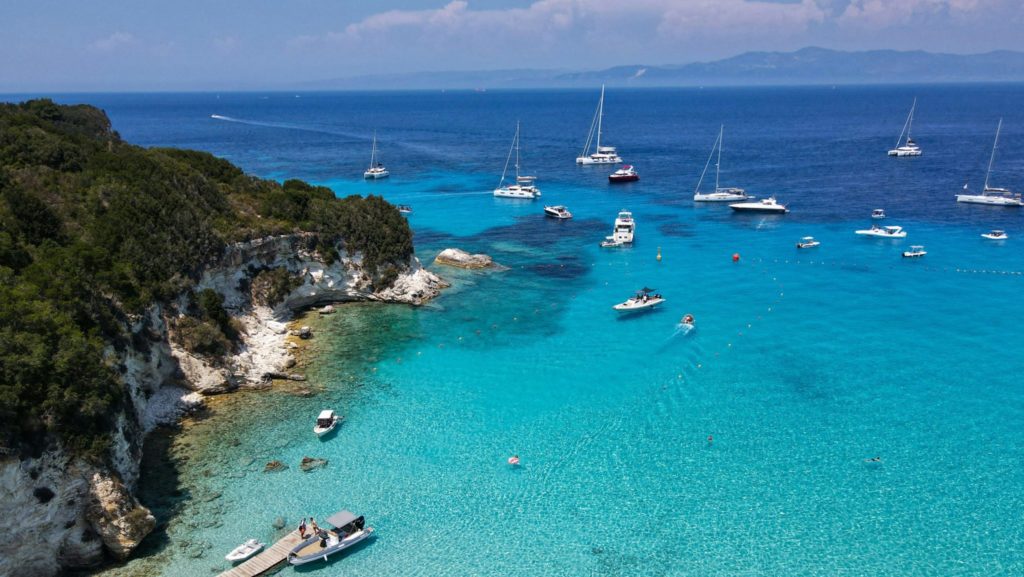
Ionian sailing in real life
The Ionian is one of those seas that relaxes you fast. Clear water, short hops between islands, and a coastline that always seems to offer one more bay for a quiet swim. I skipper charters in Greece every season, and the Ionian is the area I recommend when people want a proper holiday on the water without feeling pushed by long distances or tricky navigation.
It is also a place where a week can feel full without being rushed. You sail a couple of hours, drop anchor for lunch, then slip into a harbour for a simple dinner, and you still have time to walk the village in the evening.
The Ionian Sea is part of the Mediterranean Sea, positioned between Italy and Greece.
The Ionian islands, also known as Eptanisa, are strung out along the west coast of Greece from the Albanian frontier down to the Peloponnese and consist of the following islands: Corfu, Paxos, Lefkada, Ithaka, Kefalonia and Meganisi. For centuries they have kept their own identity and culture; each is unique, set into captivating landscapes of rugged mountains, green hills and the turquoise waters of the Ionian Sea.
The Ionian Sea is heaven for sailors with calm, clear waters, making it one of the safest navigation areas in the world. Yachting holidays in the Ionian islands are ideal for both beginners and experienced sailors because the geography combines beautiful landscapes and many unique anchorages, a mild climate and international airports. The landscape is attractive with picturesque villages, numerous fortresses from the era of Venetian rule, well-sheltered bays surrounded by pine forests and olive trees, bustling cosmopolitan towns and endless beaches where you can swim and eat in local tavernas. Sailing offers the freedom to reach places that are completely inaccessible by road.
Where it is, and why it works so well for a yacht holiday
Geographically, the Ionian sits on the west side of Greece, facing Italy. That west-facing position is one reason the scenery feels different from the Aegean: greener, more sheltered water, and plenty of natural anchorages. If you want a quick orientation, the Ionian Islands overview is a good starting point for names and distances.
Most charters start from a marina with easy logistics. Corfu has an international airport and solid provisioning. Lefkada is convenient because you can reach it by road via the causeway, so crews often fly to Preveza and drive a short distance to the marina. Kefalonia also has an airport and is a great base if you want a slightly more relaxed loop.
Timetables, opening hours and routes can change without notice. Always double-check locally before you travel.
How to reach the Ionian islands
In practice, most crews arrive by plane to Corfu, Preveza (for Lefkada), or Kefalonia, then transfer by taxi or pre-arranged van to the marina. If you are already in mainland Greece, you can also reach the islands by ferry from ports like Igoumenitsa and Patras, depending on your route. I always tell guests to keep their arrival day simple: get to the boat, do provisioning, have a calm first dinner, and start sailing the next morning with a clear head.
Seasonal feel, winds, and what to expect
The Ionian is friendly from late spring to early autumn. May and early June are my favourites for water clarity and space in the harbours. July and August bring the crowds and the warmest nights, and you will see busy quays in popular spots like Gaios and Fiskardo. September is still excellent, with warm sea temperatures and a softer pace, especially through mid-month.
In summer you often get the local thermal wind, the maistros, building during the day and easing later. It is usually manageable and predictable, which is great for families and newer crews. Still, every season has its surprises, so check official forecasts. The HNMS site is a reliable reference when you want the bigger picture for wind and weather.
Sea and outdoor activities depend on the weather and your own fitness level. Always follow local safety advice and skipper instructions.
Who it suits
This area suits mixed groups. Families like the shallow water along parts of Corfu and the short distances between stops. Couples enjoy the small harbours and sunset anchorages. Groups of friends love the mix of lively towns and quiet bays. Nature lovers find sea caves, cliffs and wildlife, plus hiking and viewpoints on the bigger islands. Older travellers usually appreciate that you can have a comfortable itinerary without long, bumpy legs.
If you want help matching the right boat to the right route, send us your dates and crew style. A few small details make a big difference in the Ionian.
Not sure where to start? Contact our local travel agency for friendly, personalised advice, seasonal offers and travel options.
Our local team of skippers, travel agents and scuba instructors with over 20 years of experience in Halkidiki is here to help you.
Corfu-Paxos-Antipaxi
Corfu, or Kerkira, is one of Greece’s most popular islands and attracts thousands of visitors each year. The green nature and beautiful surroundings are exceptional, and the island is ideal for sailing and exploring. Corfu is famous for its mild climate (local sailors sometimes call the sea “Sacred”), and visitors with yachts can enjoy a relaxed holiday.
Corfu is also a great place to start if you want a bit of culture with your sailing. The Old Town shows Venetian influence everywhere, and it is worth planning a morning walk before you cast off. For background and practical visitor information, the official Greek tourism page for Corfu is useful.
On a yacht, I like Corfu because you can choose your mood. Stay close to the town and enjoy the buzz, or head north or south and find quieter stretches with easy swimming. Provisioning is usually straightforward, and you can top up water and fuel before you start your loop.
In northwest Corfu are the Diapontian islands: Mathraki, Erikousa and Othonoi. Around Mathraki there are many shoals and rocks making access tricky but rewarding. The two other islands are often the first that yachts approach when sailing from the Adriatic. The coasts are a haven for wildlife lovers. Along the north coast of Corfu from Sidari to the peninsula of Agios Spiridon, waters are usually shallow with sandy shores ideal for children. The north‑east coast of Corfu is ideal for sailing, provides easy access and has calm, warm waters. The west coast has the most contrasts: the northern section has many challenging capes that suit diving, while further south the landscape softens with endless beaches, the sea painted blue and green from the trees around the coast. On the east side, south of Corfu town, the coasts are more uniform with shallow warm waters ideal for children and beginners.
From a skipper’s point of view, the north‑east side is often the easiest for relaxed day sailing. You get plenty of spots to stop for lunch, and the sea state is usually kinder than the open west when the breeze is up. If someone in the crew wants to snorkel or try a first dive, I always suggest doing it in calm water with good visibility. For organised diving and local sea conditions, you can check portoscuba.com and plan it around your route.
On the west coast, the scenery is dramatic and the light is fantastic in the afternoon, but it is also where you need to be more careful with swell and choose the right anchorage for the night. It is not hard — it just needs good judgement and an eye on the forecast.
Beautiful Paxos and Antipaxi are a group of islands famed for ports such as Lakka, Gaios, Longos and Meganisi, filled with yachts during the summer. The west coast of the islands features impressive cliffs and sea caves. Although Antipaxi is not always suitable for safe overnight anchorage, the beaches on the northeast coast with their spectacular crystal turquoise waters are extremely popular.
Paxos is one of those places where even non‑sailors start talking like sailors. You arrive into Gaios and suddenly everyone is checking lines, quay space, and where the best taverna is for the evening. Lakka is a favourite for a protected night, especially when the wind builds during the day. Longos is smaller and quieter, good for a simple stroll and a slow dinner.
Antipaxi is more of a daytime playground. The water can look unreal in the sun, but you treat it with respect: pick your spot, keep an eye on your swing room, and don’t force an overnight if the conditions aren’t right.
Lefkada
Nowadays, more people discover an “other Lefkada” using a yacht than those who only visit from the mainland. The modern Lefkas marina in Lefkada town has encouraged more sailor visits, with capacity for around 620 boats. The evolution of sailing from the island is now truly impressive.
Lefkada is one of the easiest Ionian bases logistically, and that matters when you are travelling with children or when the group is arriving from different cities. You can stock up well, brief the crew properly, and start with confidence. The marina is organised and the town is right there for supplies and a first night out.
If you plan to sail around public holidays, it is wise to think ahead. During Orthodox Easter
Sun, Apr 12 2026
and the Agiou Pneymatos long weekendMonday, June 1 2026
, you can see a jump in domestic travel, especially in popular harbours and restaurants.Lefkada hides many surprises for modern Robinsons, with its amazing coves, fishing villages and white beaches, many of them inaccessible by land.
That is the real advantage of being on a boat here. Some of the most photogenic stretches are hard to reach by car, or they are crowded by midday in high season. With a yacht, you arrive early, swim before the beach fills up, and leave when the day‑trippers arrive. It feels like you are using the coastline the way it was meant to be used.
The Prigiponisia opposite Nidri, including the island linked to Aristotle Onassis, Skorpios, impress keen sailors with their uniqueness and natural beauty, and further Meganissi with its numerous ports forming small fjords.
That Nidri area is perfect for a first or second day of the trip: short legs, sheltered water, and lots of options if someone gets seasick or if the crew wants a lazy start. Skorpios is famous for its history, but the wider area is what makes it special for sailing. You can hop between anchorages, have long swims, and still reach a harbour for the evening.
A little further south are the two islands of Kalamos and Kastos, with lovely isolated beaches and sea caves. Western Lefkada offers striking scenery and emotions, with small beaches tucked among pine trees and amazing transitions. Lefkada is also a windsurfing paradise: Vasiliki beach is among the world’s top windsurf spots and ranks highly in Europe, and Agios Giannis also attracts wind‑sports enthusiasts. During summer months the area “cools off” with thermal winds called maistros or mistral; these predictable daily breezes allow surfers to try new tricks. In Vasiliki this phenomenon is especially striking.
Kalamos and Kastos are great when you want that off‑grid feeling without going too far. Keep it simple: an early swim, a light lunch onboard, then a quiet evening tied up or at anchor depending on conditions. On the west of Lefkada the coastline is stunning but more exposed, so plan it with care and keep a backup option on the east side if the sea builds.
Vasiliki is the spot you mention when someone asks about wind sports. Even if you are not surfing, it is fun to watch the afternoon breeze fill the bay. Just remember that the same wind that makes it exciting on a board can make anchoring less comfortable if you pick the wrong place.
Kefalonia-Ithaca
Kefalonia impresses every visitor with its unique natural beauty, historical monuments and warm hospitality. It is the largest island in the Ionian, located opposite the entrance to the Patras Gulf, south of Lefkada and north of Zakynthos. The island has strong contrasts: green fertile land, sandy beaches, bays, caves and picturesque villages — all of which create its unique character.
Kefalonia feels bigger and wilder than many first‑time visitors expect. Distances between harbours can be longer, and the landscape changes quickly as you move around the island. If your crew likes variety, it is a very rewarding place to spend time. For official local information and cultural notes, the Region of Ionian Islands Kefalonia page is a solid reference.
Food‑wise, Kefalonia is made for slow evenings. You tie up, walk a bit, then sit down for local dishes and a carafe of wine. In high season, I advise booking a table in the most popular waterfront spots, especially in the smaller harbours.
Kefalonia is the most mountainous island in the Ionian Sea. The most important is the Enos Mountain. The mountainous region of Enos, with its rich flora and fauna, has been designated a National Park since 1962.
If you have time off the boat, Enos is worth a visit. Even a short drive inland gives you a different feeling from the coast: it is cooler up there and the views are big and open. On a sailing holiday, that contrast is gold because it breaks the rhythm of sea, swim, harbour, repeat.
Besides Kefalonia’s endless natural beauty, it also has a rich history reflected in remarkable monuments, forts and archaeological sites.
History in the Ionian is not just museums. It is in the fortresses, the architecture, the little chapels, and the way towns are laid out around their harbours. If you enjoy that side of travel, plan at least one morning where you leave the boat early, walk, and then come back for a late swim when the sun is high.
Each year thousands of tourists from all over the world visit the island to discover its beauties and mysteries.
In July and August that popularity shows. Harbours fill up and the best spots go early. The trick is to start sailing earlier in the day, arrive before the rush, and keep your docking tidy so you are not stressed. A calm approach makes the whole crew happier, even if the quay is busy.
It is one of the most beautiful and famous islands of Greece, which inspired the Hollywood producer who filmed the movie Captain Corelli’s Mandolin, which had great commercial success.
The gorgeous rocky island of Ithaca is separated from Kefalonia by the 2 nm wide Ithaca channel and is almost cut into two by the long Gulf of Molos on its east side; the isthmus is only 600 m wide. Ithaca, together with the Echinades isles, forms a marvellous area for yacht charters.
Ithaca has a different pace. It is quieter, more intimate, and suits crews who like peaceful anchorages and small harbours where you can hear the water at night. The channel between the islands can be a lovely sail, and you often get good conditions for an easy, pleasant passage.
The must‑see harbours and anchorages include: Frikes, Kioni, Vathy, Polis Bay, Pera Pidagi, Atokos, Astakos, Oxia, Efimia, Poros, Fiskardo, Assos and Argostoli, plus the series of bays south of Fiskardo.
That list is basically a ready‑made itinerary, but the best route depends on your crew. Some people want a new harbour every night; others want to stay two nights in one place and really feel it. On a skipper‑led trip, I usually mix it: a couple of lively stops, a couple of quiet bays, and one “treat” harbour where you dress up a little and enjoy a long dinner.
As in Kefalonia, Ithaca is a refuge for Caretta-Caretta turtles and several monk seals Monachus-Monachus. Their numbers are small, but they need special attention, especially on sandy beaches, where it is not uncommon to find traces of baby turtles making for the sea. This means nests of the protected Caretta‑Caretta species can be found buried in the sand, waiting to hatch. Also, on the western rocky coast, seals Monachus‑Monachus often rest before continuing their journey into the Mediterranean.
When you sail in areas with protected wildlife, small habits matter. Keep noise down near quiet coves at night, do not shine strong lights on beaches, and be careful with speed close to shore. It is not about rules for the sake of rules; it is about leaving the place the way you found it so the next crew can see the same magic.
Practical onboard tips that make the week smoother
- Start earlier on busy days. In peak summer, arriving before late afternoon can be the difference between an easy berth and a stressful hunt.
- Anchor with room to swing and always check your holding. The Ionian is forgiving, but it still deserves proper seamanship.
- Keep a light plan for the first day and the last day. Travel fatigue is real, and people enjoy the trip more when it starts gently.
- Bring reef shoes for rocky entries and a simple snorkel set. Even a short swim stop can turn into a highlight.
- Respect quiet harbours. Some places are small and locals live right on the waterfront, so a little consideration goes a long way.
Charter planning: boat type, trip style, and comfort
In the Ionian you can do this trip with a sailing yacht, a catamaran, or a motor yacht. Sailing yachts give you that classic feel and are great value for longer weeks. Catamarans are popular with families and groups because of space, stability and easy living at anchor. Motor yachts suit crews who want to cover more ground, or who prefer shorter travel times and more time swimming and exploring ashore.
Whatever you choose, the best trips are the ones that match the crew. If you tell us who is coming, what you like doing, and how active you want to be, we can suggest a route that feels natural, not forced.
If you’d like to explore the coast, ask us about day trips at sea and sailing boat options.
If you want to lock in the right boat and the right base, reach out and we will help you plan the route, provisioning, and realistic daily legs.
call us: +306980700070
send a message via WhatsApp
call or text us on Viber
send a message via Messenger
Don’t forget to mention:
- Number of persons, possible dates
- The hotel you’ll be staying
- The activity you are interested in