


Northern Sporades islands: a skipper’s notes for real trips
The Northern Sporades lie off Greece’s east coast in the northern Aegean and are a joy to explore by boat. The archipelago comprises 24 islands, five of which are inhabited: Alonissos, Skiathos, Skopelos, Skyros and Peristera.
I usually describe them as greener than most Aegean islands, with short hops between anchorages, plenty of shelter and that pine-and-salt scent you only get up here. If you are planning day trips or a multi-day cruise, watch the Meltemi in summer and always leave room in the itinerary for a calm bay or a port night.
Our local team of skippers, travel agents and scuba instructors with over 20 years of experience in Halkidiki is here to help you.
Skopelos:
In island legend, Skopelos was founded by Staphylos (Greek for grape), one of the sons of Dionysos and Princess Ariadne of Crete. Perhaps for that mythic link to the god of wine, the island is known across Greece for its wine.
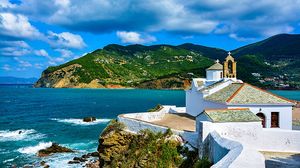
Skopelos is where I send people who want the classic Sporades feeling: deep green hills, white chapels on ridges and water that fades from jade to cobalt as you move off shore. It’s also an island you can enjoy without rushing — you can spend a day hopping between two bays, swimming and having a long lunch, and it will still feel like a full day.
The saxophone shape of the island, with the neck pointing north‑west, gives a great variety of bays, natural harbours and cliffs that fall steeply into the sea along much of the coast. The main port is called Skopelos, but there are many attractive villages to visit such as Chora, Agnondas, Panormos, Glossa and Elios.
From a skipper’s point of view, the coastline is a gift: when the wind turns you can usually find a sheltered side. The trade‑off is that some coves get busy in July and August, especially those with easy road access. For quieter swims, go earlier in the day or choose a bay that is harder to reach by car.
Skopelos is one of the greenest islands in the Aegean and offers many extraordinary beaches along its 62 km coastline. Staphylos, Velanio (the unofficial nudist beach), Agnondas, Limonari, Panormos, Adrines, Milia, Kastani, Elios, Hovolo, Armenopetra, Kalives, Glyfoneri, Glysteri, Perivoliou, Keramoto, Chondrogiorgos and more are some of the shores where you can have a memorable experience.
For families, organised beaches such as Panormos and Milia are simple and comfortable, with clear shallows and good land support. For couples or small groups seeking privacy, the little coves and rock shelves are the real treasure, but you need a good anchor set and a careful eye on depth and swing. Water clarity is usually excellent, and after a couple of days you begin to recognise seabed colours that mean sand versus weed, which makes anchoring far less stressful.
Skopelos was a filming location for the 2008 film Mamma Mia. The wedding procession was filmed at the Agios Ioannis chapel near Glossa village. Find out more about the movie.
If you plan to visit the chapel, avoid peak midday hours. The steps are part of the experience but, in the heat, can feel like a short workout — take water and sensible shoes. By boat, the coastline is beautiful to approach slowly, especially when the late afternoon light softens.
The town of Skopelos was designated a Traditional Settlement of Outstanding Beauty (9/10/1978 Presidential Decree 594,13-11/78, signed by President of Greece Konstantinos Tsatsos). This is equivalent to a site of Outstanding Architectural Inheritance. The island has more than 360 churches and chapels; the oldest surviving ecclesiastical building is the Basilica of Agios Athanasios, built in the 11th century and located in the Kastro (fortress) area.
Skopelos town is also the place for a proper evening stroll after a day at sea: narrow lanes, small courtyards and a calm rhythm you don’t always find on busier islands. If you are there for Orthodox Easter, the atmosphere is special, with candlelit services and quiet streets after midnight. If your trip coincides with spring holidays, check
Sun, Apr 12 2026
early as ferry and marina availability can change.For official local information and events, check the municipality pages close to your travel dates: Municipality of Skopelos.
If you’d like to explore the coast, ask us about day trips at sea and sailing boat options.
Sea and outdoor activities depend on the weather and your own fitness level. Always follow local safety advice and skipper instructions.
Skiathos
Skiathos is widely regarded as one of the most beautiful islands in the Aegean. Dense forests cover its mountainous interior, while exotic beaches are known worldwide. Famous Lalaria with its white cliffs and cosmopolitan Koukounaries are island highlights and attract thousands of visitors each year.
I pick Skiathos when someone wants a bit more energy: beach bars, straightforward logistics and plenty of options for a quick swim stop that still looks unreal on camera. It also has a practical advantage for travellers: an airport, so you can arrive and be on the water quickly — ideal for shorter holidays.
Skiathos is the most cosmopolitan and most developed tourist island of the Sporades. It is the first island east of Pelion, lying 41 Nm from Volos and 44 nm from Agios Konstantinos.
If you come by ferry from the mainland, Volos is the classic gateway with the most summer connections. If you drive, allow extra time for parking near ports and for boarding, because weekends can be hectic. Start times and routes can change with weather and season, so always double‑check with the operator and the port authority before you finalise your plan.
Timetables, opening hours and routes can change without notice. Always double-check locally before you travel.
It is relatively small — about 48 sq km — but packed with variety: low verdant hills, long sandy beaches and many bays and coves that are only accessible by boat.
Those boat‑only coves are where Skiathos really shines. Even in high season you can often find a pocket of calm water if you move a little away from the main beach circuit. Early morning is best for Lalaria because the light is clean and the sea often flatter. When the Meltemi blows, the north side can get bouncy and you may prefer the more sheltered southern coast.
The island also has notable historic sites and monasteries. Monuments such as the Castle and Bourtzi and the house of the great Greek poet Papadiamantis, which has been turned into a museum, are worth a visit.
For culture and a break from sun, the Papadiamantis House is a pleasant stop in town, and Bourtzi combines well with a walk and a coffee. For background and up‑to‑date visitor information, see the official Greek tourism portal: Visit Greece, Skiathos.
Skiathos has more than 60 beaches. The south‑east hosts the most popular and best‑organised sands, with beach bars, watersports and games. From the town you reach the Great Sand beach, an extensive stretch of sand that attracts many visitors. Nearby are Vassilias and Achladies, where you can try watersports — Achladies is particularly popular for windsurfing because of local currents. Other busy, well‑organised beaches include Kanapitsa, Kalamaki, Vromolimnos, Agia Paraskevi and Troulos.
For groups this is easy mode: mix swimming with watersports, then dock or anchor close enough to head ashore for dinner. For quieter moments, pick off‑peak hours or travel in the shoulder seasons of late May or September when the water is still warm and crowds are thinner. If you dive or snorkel, visibility around the Sporades can be excellent; for local underwater tips and courses check portoscuba.com.
If you travel around the Holy Spirit holiday, expect locals to take short breaks and domestic travel to spike. It’s a lovely time on the water, but book early and stay flexible. Dates are here:
Monday, June 1 2026
Skyros
Skyros is the largest and most southerly island of the Sporades complex and lies north‑east of Kimi. Its solitary position in the sea gives it a timeless feel, as if time has been paused for boats passing by.
Skyros feels different from the other islands, partly because it sits a little apart and has its own character. I recommend it to travellers who have time and want something less postcard‑busy. It also suits nature lovers and those who enjoy longer sailing legs with fewer stops, because distances around Skyros can be greater and the weather window matters more.
One geological theory says Skyros was once three independent islands. That explains the contrast between the green north and the rocky south. A sea passage about 3 kilometres wide runs through the middle. The island covers roughly 210 km² and is surrounded by many islets and rocks.
The contrast is obvious from the sea: up north there are more pines and gentler lines, while the south looks raw and rugged. In summer the water around the rocky parts can be crystal clear and excellent for snorkelling, but be mindful of gusts and acceleration zones around headlands. If you aren’t used to it, the chop can surprise you even on a sunny day.
The capital is Skyros or Hora, in the north‑east. The main port sits mid‑way along the western coast. Hora is built on a hillside beneath a medieval castle and the Byzantine monastery of Agios Georgios, and features Aegean architecture: white cubic houses with dark roofs.
Hora is worth the climb for the views and the evening atmosphere when the heat eases and streets come alive. Skyros has a strong craft tradition you’ll find in workshops and shops around town. For practical travel info, Wikipedia provides a useful overview: Skyros (Wikipedia).
Magazia Bay is one of the island’s most stunning beaches. In the south are Molos and Pera Kambos. Between the town and Linaria lies the resort Aspous, with the idyllic cove Achili.
For families, Magazia and Molos are user‑friendly with space and services nearby. For swimmers who want quieter water, the coves near Aspous can be attractive, but conditions change quickly with wind direction — sometimes the best move is to sail 20 minutes and find flat water, which makes a big difference.
Linaria is a picturesque amphitheatre settlement with tourist development. Close to Linaria are the beautiful beaches Kalamitsa, Acherounes and Pefkos.
Linaria is also the practical side of Skyros — a place for supplies, fuel and a calm night alongside. On a multi‑day trip I recommend planning at least one port night: it lets everyone reset, take a proper shower and enjoy a long dinner without watching the anchor alarm every five minutes.
The northern landscape around Olympus and pine‑lined beaches is worth a tour. More adventurous trips head south to Kohylas, the island’s highest point, where the terrain is dry and rocky and resembles parts of southern Evia.
On the water, Skyros rewards patience. If you can wait for the right day you get perfect passages with steady breeze and long visibility. If you rush, you may end up fighting the sea — so plan bigger legs early in the trip to keep flexibility later.
When you reach Tris Boukes by boat, a large natural port opens up, flanked by the islets Plato and Saracino. At Tris Boukes is the tomb of the British poet Rupert Brooke, who died here returning from Gallipoli.
Also of interest are the small Skyros horses, a rare indigenous breed. These famous ponies developed over centuries in the island’s mountains and coastal areas.
Anemoessa Skyros is certainly one of the most beautiful islands in Greece and a superb sailing destination.
Allonisos
Due to its position, Alonissos was historically a sea passage of the Aegean. It differs from the ancient Alonissos, which was probably the neighbouring island of Kyra Panagia. The area hosted trading activity during the Minoan period and prospered thanks to wine, which remains well known today.
Alonissos is the island I reserve for people who want nature first: less noise, more trails and the sense that sea and cliffs are the main attractions. It is also one of the best places in Greece to appreciate protected marine life from a respectful distance, and it is ideal for calm swimming in clear water when the weather is kind.
Surrounded by a cluster of small islands, the landscape is defined by cliffs and many sea caves that are a refuge for the monk seal. In 1992 the National Marine Park of Alonissos – Northern Sporades was founded to protect the monk seal (Monachus monachus), one of the rarest mammals in the Mediterranean. The Marine Park is a unique habitat and also undertakes research and treatment of monk seals and other species.
If you cruise here, respect the park rules and keep your distance from caves and sensitive areas. It’s not just about fines — it’s about keeping the place wild so future seasons feel the same. For a reliable weather check before you move between islands, I like the official HNMS forecasts: Hellenic National Meteorological Service.
Patitiri is the main port of Alonissos and the island’s commercial centre. Hora (or Alonissos) is the hilltop capital with traditional stone houses and colourful windows and doors.
Patitiri handles the practicalities, while Hora is where you go for views and a proper walk. The evening light over the sea is beautiful and the air cooler, even in August. Food across the Sporades is simple and honest: lots of fresh fish when the weather allows fishing boats out, and local dishes that don’t try too hard.
Alonissos is ideal for hikers — cobbled paths and trails let you enjoy the nature. Alonissos hosts the headquarters of the International Academy of Classical Homeopathy. The islands are not yet overcrowded with tourism, which preserves their natural beauty and attracts nature lovers every summer.
June is a sweet spot for warm days without full peak crowds, and September can be fantastic for swimming because the sea has stored the summer heat. In July and August Alonissos generally stays calmer than Skiathos, but popular spots can fill if the wind pushes everyone into the same sheltered bays.
Some uninhabited islands around Allonisos you can visit by boat include Gioura, Pelagonisi, Psathoura, Piperi and Peristera — each unique, with sandy or rocky beaches, perfect for fishing and swimming.
These little islands are exactly why a boat makes sense in the Northern Sporades: a quiet morning swim, a snorkel over rocks, then moving on before the day heats up. Keep your plan realistic: distances look small on a map, but wind and sea state can slow you down. The best day is the one where everyone feels safe and relaxed. If you want help matching the right boat to your group, from a comfortable motor yacht to a proper sailing yacht for longer legs, send a message and we will set it up.
Not sure where to start? Contact our local travel agency for friendly, personalised advice, seasonal offers and travel options.
call us: +306980700070
send a message via WhatsApp
call or text us on Viber
send a message via Messenger
Don’t forget to mention:
- Number of persons, possible dates
- The hotel you’ll be staying
- The activity you are interested in