



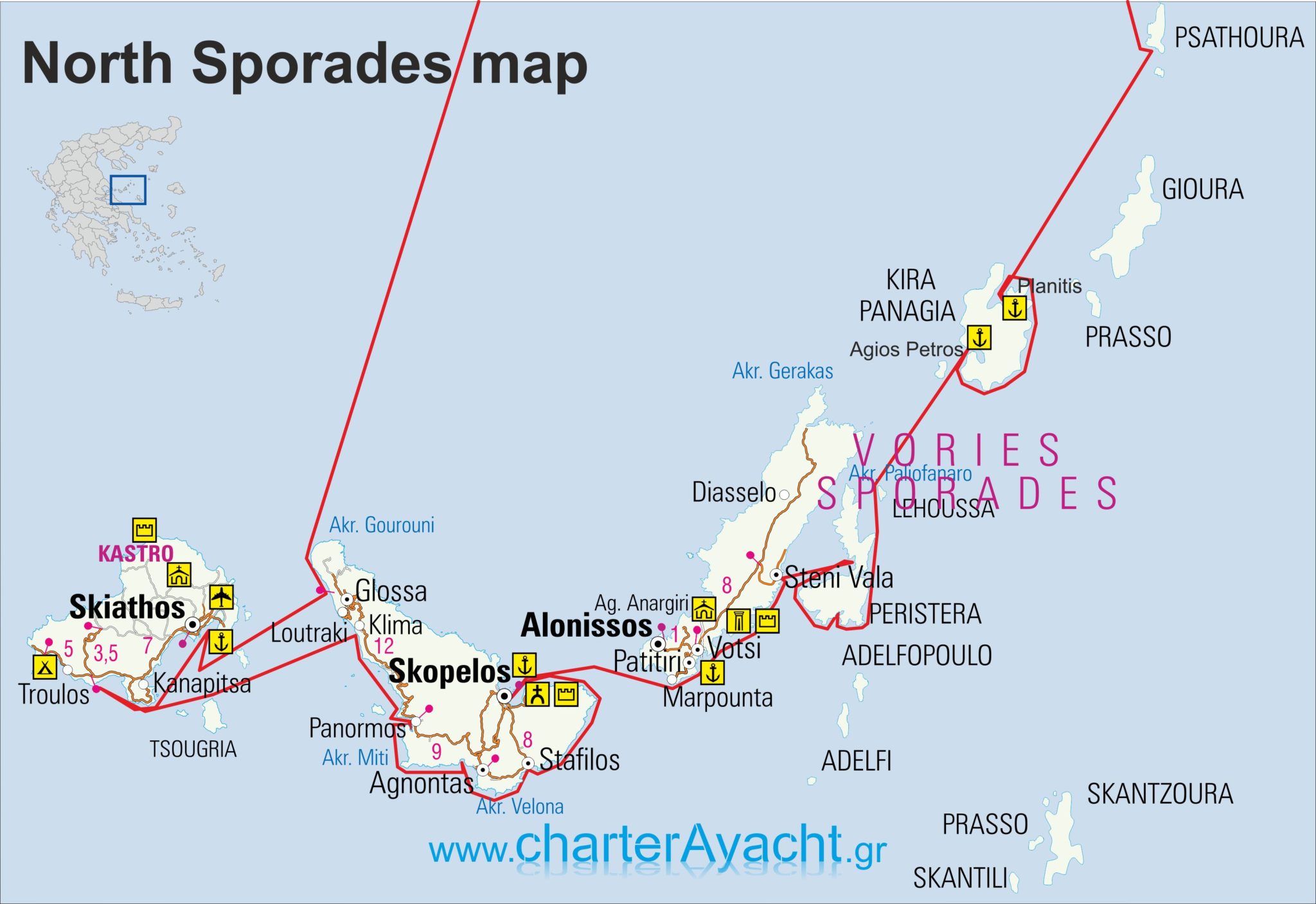
2026 Map of Skiathos, Skopelos, Alonnisos – North Sporades
These three islands sit close together in the North Sporades, off the east coast of mainland Greece, and they are made for slow exploring. A good map is more than a nice extra here — it helps you link beaches, ports, trails and anchorages into a plan that actually works on the day.
Welcome to our comprehensive guide to the North Sporades Islands: Skiathos, Skopelos and Alonnisos. Located in the Aegean Sea, the North Sporades offer a unique blend of stunning natural beauty, rich history and warm local culture. Whether you’re after adventure, history or pure relaxation, these islands have something to suit you.
One of the essential tools for exploring these islands is a map. In this guide we’ll provide up-to-date maps of Skiathos, Skopelos and Alonnisos to help you navigate with ease. You’ll also find practical notes on the islands’ geography and history, plus highlights and attractions to add to your plan.
How to use the map like a skipper (even if you are on foot)
On the water, distance looks shorter than it is. On land the opposite happens because roads bend around hills and pine forests. When you study the map, watch three practical things: where the main ports are, which bays are sheltered, and how the island roads connect beaches and villages.
If you are island-hopping, the map also helps you judge wind exposure. In summer the Meltemi can arrive, usually strongest in July and August, and it can make open stretches feel bumpy. Nothing dramatic most days, but you’ll appreciate knowing which coast is calmer for swimming and which side is better for sunset drinks.
Geography of the North Sporades Islands
The North Sporades lie in the Aegean Sea, east of the Greek mainland. Skiathos is the westernmost of the group, followed by Skopelos and Alonnisos. The islands are known for rugged mountains, crystal-clear waters and lush vegetation, making them a haven for outdoor lovers.
From a skipper’s point of view, they form a very workable cluster for day trips and short multi-day routes. The crossings are not long, so you can mix a morning swim stop with an afternoon arrival and still have time for a proper taverna dinner. Just remember conditions can change quickly in the Aegean, so keep plans flexible and check official forecasts before you commit. A reliable starting point is the Hellenic National Meteorological Service.
Skiathos
Skiathos is the most developed of the three islands, with lively nightlife, excellent restaurants and a wide range of accommodation. Despite its popularity, Skiathos has retained traditional charm, with picturesque villages and attractive beaches.
Geographically, Skiathos is compact and easy to cover. The south coast hosts many organised beaches and most road access, so it gets busy in high season. The north coast is wilder with more dramatic scenery, and when the wind is right it’s a fine place for a quick look and a swim, though it can be choppy on Meltemi days.
What I like about Skiathos is how quickly you can switch mood. One hour you’re in Skiathos Town for coffee by the harbour; the next you’re anchored off a beach with clear water and pines behind you. If you’re travelling with teens or a group who want evening options, Skiathos is usually the easiest base.
Skopelos
Skopelos is known for dense pine forests, crystal-clear water and traditional architecture. The island has a more laid-back vibe than Skiathos, making it ideal for unwinding and relaxing.
Skopelos feels taller and greener, and the coastline has many coves perfect for a quiet swim. The main town (Skopelos Town) is built amphitheatrically and looks best in the late afternoon light when the heat drops. If you are driving, you’ll notice the roads are scenic but not fast, so it pays to group stops on the same side of the island. People often try to do too much and end up spending half the day in the car.
The island suits couples and older travellers who prefer a calm evening and a proper dinner rather than loud bars. You still have plenty of choice, just without the constant buzz.
Alonnisos
Alonnisos is the least developed of the three and is known for unspoilt natural beauty. The island has several beautiful beaches, secluded coves and excellent hiking trails.
Alonnisos is where the pace drops. The water can be exceptionally clear, especially outside peak weeks, and the feeling is very nature-first. The big highlight in the wider area is the National Marine Park of Alonnisos and Northern Sporades, a protected zone that supports rare wildlife including the Mediterranean monk seal. For an official overview start with the park information here: National Marine Park of Alonnisos and Northern Sporades. Rules and zones can change, so always respect signage and local guidance.
If you like simple tavernas, quiet anchorages and mornings that begin with a swim, Alonnisos will feel right. Families who want calm water and fewer crowds often prefer it too, provided everyone is happy with a more relaxed nightlife.
Getting there and moving around
Most visitors arrive via Skiathos, which has an airport and plenty of seasonal connections. From there you continue by ferry or water taxi to Skopelos and Alonnisos. Another common route is via Volos or Agios Konstantinos on the mainland, depending on season and ferry schedules. Always double-check routes close to travel dates because they change with demand and weather.
On the islands, buses and taxis cover the main routes, and car or scooter hire is popular. If you are using the map for driving days, note that parking around Skiathos Town and popular beaches can get tight in July and August. Going earlier in the morning makes a huge difference, even if you are not a morning person.
If you are thinking of seeing more than one island without packing and unpacking every day, a private boat day can be a very comfortable solution. You get to swim in spots that are awkward by road, and you can time your stops around the crowds.
If you’d like to explore the coast, ask us about day trips at sea and sailing boat options.
Seasonal feel: crowds, wind, and water clarity
Late May and June are a sweet spot for many travellers. The islands are green, the light is beautiful and the sea starts to warm. July and August bring the biggest crowds, especially to Skiathos beaches like Koukounaries, and the Meltemi is more likely to show its teeth. September is calmer again, the sea is still warm, and you can often find space in the best bays without rushing.
Water clarity is generally excellent across the Sporades, and it can be glassy on calm mornings. After a windy day some exposed beaches pick up surge, so a sheltered cove can feel like a different island. That is where the map helps — you can quickly pick the leeward side.
Practical boat notes for visitors
If you join a day cruise or charter, ask where you start from and how long the crossings are expected to be. Departures can shift with weather and port traffic, and sometimes the best plan is to swap the order of stops rather than push into an uncomfortable sea.
Timetables, opening hours and routes can change without notice. Always double-check locally before you travel.
And one more thing, especially for families. Even on calm days the sun reflection off the water is strong. Bring hats, reef-safe sunscreen and water. If someone gets seasick, tell the skipper early. A small adjustment in speed or route can help a lot.
Sea and outdoor activities depend on the weather and your own fitness level. Always follow local safety advice and skipper instructions.
Local tip: if you love snorkelling, pack your mask. You don’t need fancy gear to enjoy the clear water, rocky edges and small fish. For diving and local sea-activity information in Greece, you can also check portoscuba.com.
Our local team of skippers, travel agents and scuba instructors with over 20 years of experience in Halkidiki is here to help you.
History of the North Sporades Islands
The North Sporades have a rich history dating back thousands of years. The islands were originally inhabited by the Pelasgians before being conquered by Persians, Romans and Byzantines.
During the Ottoman occupation the islands were sometimes used as bases for pirates, who would raid passing ships. In the 19th century the islands became part of the newly formed Greek state and experienced a period of growth and development.
Today the islands are popular tourist destinations, attracting visitors from around the world.
You still see this layered history in small details: old chapels on headlands, fortified points near harbours, and traditional architecture in hill villages that were built a little inland for safety. If you enjoy cultural stops between swims, it’s worth planning at least one afternoon to wander the towns slowly rather than treating them only as ports.
For official visitor information and heritage highlights, the Greek National Tourism Organisation is a solid reference and helps when you want to verify what is open in the shoulder season.
Popular Destinations and Attractions
- Each of the North Sporades islands has its own unique attractions and destinations. Here are some of the most popular:
- Skiathos: Koukounaries Beach, Lalaria Beach, Skiathos Town, Bourtzi Fortress.
- Skopelos: Panormos Beach, Stafylos Beach, Glossa Village, Agios Ioannis Chapel (featured in the movie Mamma Mia!).
- Alonnisos: Chora (the main town), Steni Vala (a picturesque fishing village), Kalamakia (a popular beach).
A quick reality check from the sea: Lalaria is famous for good reason, but it’s weather-dependent and gets busy with excursion boats. If you can, aim for earlier or later in the day. Koukounaries is large and beautiful but in peak season it feels lively rather than secluded. Skopelos’ Agios Ioannis Chapel is a classic stop and the views are worth the steps — just wear proper shoes because the stone can be slippery when hot and dusty.
Food and local life you should not skip
On all three islands the best meals are usually the simple ones: grilled fish when the boats have been out, salads with proper summer tomatoes, and slow-cooked dishes in the villages. If you’re on a boat day, ask to stop near a harbour taverna rather than eating in a rush. It turns a nice trip into a day you remember.
If you visit around Orthodox Easter the islands feel more local and traditional, with a different rhythm and fewer visitors. Dates change each year, so check ahead:
Sun, Apr 12 2026
. For the Holy Spirit holiday, which can also bring a busy long weekend, here are the dates:Monday, June 1 2026
.Who these islands suit best
Skiathos suits first-timers, groups and anyone who wants easy logistics and nightlife. Skopelos suits couples, photographers and travellers who like greenery, viewpoints and calm evenings. Alonnisos suits nature-lovers, hikers and anyone chasing quiet coves and clear water. If you are travelling with children, all three work well, but I usually steer families toward calmer bays and earlier starts so the day stays easy.
Planning a day or multi-day route
If you only have one day, base it on the weather. A common approach is to focus on one island plus a couple of swim stops rather than trying to tick all three. If you have two or three days, island-hopping becomes relaxed and you can add time for village walks and a long lunch.
If you want help matching a route to your group, tell us your dates, where you’re staying and what you enjoy doing — swimming, photos, quiet beaches or lively ports. We can suggest a plan that fits the conditions for that week.
Not sure where to start? Contact our local travel agency for friendly, personalised advice, seasonal offers and travel options.
call us: +306980700070
send a message via WhatsApp
call or text us on Viber
send a message via Messenger
Don’t forget to mention:
- Number of persons, possible dates
- The hotel you’ll be staying
- The activity you are interested in