


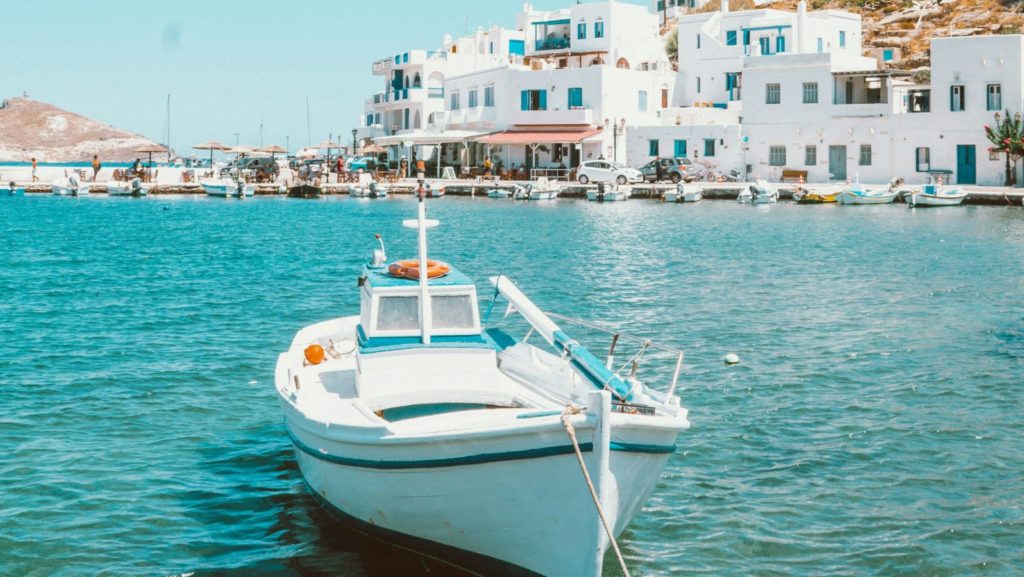
The Cyclades are a group of islands in the Aegean Sea, widely regarded as some of the world’s best holiday destinations. They share common traits: traditional Cycladic architecture, narrow cobbled streets, archaeological sites, religious and natural attractions, picturesque seaside and mountain villages, and long sandy beaches. Each island, however, has distinctive features that make it unique.
The Cycladic islands offer numerous beaches and favourable sailing conditions. Many harbours where yachts can moor provide refuelling, and several islands have marinas for private boats. The Cyclades can satisfy all tastes — from lively, action-packed trips to quiet, relaxing breaks. You will find islands suited to family holidays, groups of friends, couples or solo travellers.
The main Cycladic islands are: Amorgos, Anafi, Andros, Paros, Antiparos, Dilos, Ios, Kea, Kimolos, Milos, The Small Cyclades (Donousa, Folegandros, Koufonissia and Syros), Mykonos, Naxos, Santorini, Serifos, Sikinos, Sifnos and Tinos.
Amorgos
Amorgos is the easternmost Cycladic island. Part of the Sailing Park of the Small Cyclades, it is ideal for an unforgettable sailing-yacht experience for beginners and seasoned sailors alike. It forms a link towards the Dodecanese and lies close to Astypalea. The coastline stretches some 112 km of rocky terrain. On one side, wild mountains; on the other, green valleys — together they give the island a distinctive beauty. Amorgos’s beaches are known for their purity. The natural scenery, deep-blue Aegean Sea and rugged rocks create a perfect setting to escape the everyday.
The island has two natural ports: one in the bay of Katapola and another at Amorgos town. Because of its geographic position and historical links with Ionian cities (Ephesus, Halicarnassus, Miletus), Amorgos was an early stop for Ionian tribes passing through the Cyclades. The ruins of three ancient towns — Arsekinis, Egialis and Minoa — reveal important aspects of the island’s past. Like all Cyclades it experienced rule by Venetians and Ottomans and suffered pirate raids, yet it has retained a strong Cycladic identity seen in village architecture and local life.
Milos
Located in the south-west of the Cyclades, Milos is the fifth-largest island. Shaped like a horseshoe, its port Adamas is one of the largest and safest natural harbours in the Mediterranean.
Volcanic soil has carved unusual rock formations and created beaches with striking colours — platinum sands and sculpted rocks mirror the Aegean blue and attract visitors worldwide. Milos is rich in mineral resources: the extraction of obsidian, a glass-like black rock, contributed to the island’s ancient prosperity. Milos is among the oldest mining areas in the Mediterranean; archaeological remains and finds reveal its long history. With many calm capes, the island hosts numerous yachts during summer cruising routes.
Kimolos
Kimolos is an unspoilt paradise. This small island, close to Milos in the south-west Cyclades, has remarkable natural beauty.
A volcanic island, Kimolos hosts a unique variety of rocks — perlite, kaolin and striking white bentonite formations. There are deposits of semi-precious stones such as amethyst, quartz and opal. Beyond its geology, the island is notable for its flora; the Mediterranean shores are a refuge for seals, and rare species such as the viper lepetina, the blue lizard and the golden owl can be found.
Kimolos’s beaches suit all tastes: fine sand, pebbles and rocky coves form distinctive coasts. Aliki and Bonatsos are among the island’s largest sandy beaches. Agios Georgios, with its white sand, is one of its most spectacular spots. Small ports and hidden beaches are often only accessible by boat; you can moor at Kimolos’s port Psathi. Explore beaches such as Panagia, Mersin, Mandra, Monastiria and Agioklima, and visit the impressive Gerakia sea cave.
Andros
Andros has a very distinct character. Its natural beauty and important monuments reveal a proud history; the island enjoys an international reputation and is a favoured holiday choice.
The northernmost Cycladic island and second largest after Naxos, Andros is greener and more fertile than many other Cyclades. Olive groves and orchards create landscapes uncommon in the archipelago. Andros is also known for its many running springs and streams. The island hosts lively cultural events year-round, and the Museum of Contemporary Art is worth a visit.
Andros is fringed by dreamy beaches with golden sand and clear waters, ideal for relaxing. The island is popular for sailing; thanks to an active yacht club it hosts an international sailing race on the last weekend of August. By boat you can moor in Gavrio and visit the nearby Gavrionisia.
Folegandros
Folegandros lies between Milos and Sikinos. A mountainous island with rocky soil, it is marked by changing landscapes: wild peaks, secluded beaches, green pockets and white houses form its authentic charm.
Its history is long and elusive. Although it has few major archaeological sites, the island exudes a nobility and radiance found nowhere else. The main village with its Venetian castle, the traditional settlements and the picturesque harbour Karavostasis are highlights. Agali and Ano Meria are small villages with character. The island’s beaches and tranquil landscapes invite relaxation. Agali is a safe anchorage from northerly winds. Take care around Garbi: when the weather changes, the sea can swell later in the afternoon and night.
Syros
Syros, the administrative capital of the Cyclades, is a great destination for short or longer breaks and offers a variety of choices. It lies about 80 nautical miles from the port of Piraeus.
Syros (or Syra) sits near Andros, Tinos, Mykonos, Naxos and Paros to the north-east, and Sifnos, Serifos, Kythnos and Kea to the west and south-west. The island’s main port, Ermoupoli, was once Greece’s first commercial harbour. The capital is built on two hills; magnificent neoclassical buildings, well-preserved mansions, churches and traditional houses form the first images to greet visitors. If you arrive by boat you can moor in Ermoupolis, Finika or Vari.
A tour of Syros is full of surprises: alternating landscapes, traditional villages and seaside resorts with grand mansions reveal the island’s uniqueness. Syros is cosmopolitan with developed tourism and is also the shipbuilding centre of the Cyclades. Vessels from around the islands go to Syros shipyards for lifting and technical support.
Sifnos
Sifnos is an island of enduring natural beauty, white traditional houses, many churches and friendly locals. It blends authentic Cycladic character with its own identity. The island’s rich history is visible in every street: archaeological sites, churches and monasteries, rugged mountains, long beaches and sheltered coves.
Part of the western Cyclades and lying between Serifos, Kimolos and Antiparos, Sifnos has gained a strong reputation in recent years. The port Kamares fills during summer with travellers arriving to enjoy the island. Other small ports include Vathi, Chersonissos, Faros and Fasolou. Culinary visitors will enjoy Sifnos; it is associated with the cook Nikos Tselementes and its traditional recipes. Main sea routes include passages from Kamares south towards the monastery of Poulati, which pass a number of pretty small beaches.
Ios
Ios (Nios to locals) is one of the Cyclades’ most beautiful islands, situated between Santorini, Paros and Naxos. Small but striking, it stands out for its natural beauty.
The island combines a rich history, seen in its archaeological sites, with wild landscapes and many beaches. It has 86 km of coastline, 32 km of which are beaches with crystal-clear waters. Ios has developed a strong international reputation as a tourist destination; thousands visit each year. The island is also famed for its nightlife, offering entertainment to suit many tastes. For sailors, Ios offers mooring in a safe natural harbour known as “Little Malta” and the chance to explore dozens of attractive bays and beaches.
Santorini
Santorini (Thira) is a unique island formed by volcanic activity and famous for its dramatic beauty.
As a ship enters the port, visitors face this natural wonder: on one side the raw volcanic cliffs, on the other the Cycladic charm of villages. The Santorini group comprises Thera, Therasia, Aspronisi, Palea and Nea Kameni. Located at the southern end of the Cyclades and about 63 nautical miles north of Crete, Thira is beloved by sailors; coastal colours and geological formations are striking. Yachts can anchor in the port of Athiniou, marina Vlihada at the island’s southern tip, or moor in Gialos, the old port of Fira. Safe harbours include Nea Kameni in Kakaki bay and Armeni in Oia.
While retaining Cycladic traditions, Santorini’s volcanic history sets it apart; the island was destroyed and reshaped by eruptions. It is famous worldwide for its sunsets. Each summer thousands of travellers arrive from across the globe to enjoy a truly singular place.
Paros-Antiparos
Paros is a beautiful, cosmopolitan Aegean island and a popular summer destination.
Situated near the centre of the Cyclades and the third-largest island after Naxos and Andros, Paros was historically a commercial crossroads of the Aegean and has seen many cultural influences. It has fine Byzantine churches and monasteries and abundant natural beauty. Idyllic beaches with crystal-blue waters and wide sands are excellent for swimming and water sports. Paros is also famous for Pounda beach, which annually attracts windsurfers and kitesurfers from around the world. By boat you can moor in Parikia, Naoussa, Piso Livadi and Drios; fuel is available in Parikia and Naoussa.
Antiparos sits in the centre of the Cyclades within walking distance of Paros and was once part of it. The port is called Antiparos or Castle on the northern coast. In ancient times Antiparos was known as Oliaros and was notably green; later events altered the island’s topography. West of Antiparos lie three now-uninhabited islands of archaeological interest: Despotico, Tsimintiri and Strogilo. Excavations on Despotiko revealed parts of a classical-era temple, an archaic Doric column, marble building sections, figurines and many other finds. Despotico and Strogilo are islands of pristine nature and endangered species and are included in the Natura 2000 network. These small islands make excellent sailing destinations.
Mykonos
Mykonos is the most cosmopolitan Cycladic island and one of Greece’s best-known destinations worldwide. Nicknamed the island of winds, it sits centrally among the Cyclades between Tinos and Naxos and is the closest island to Delos.
Mykonos was among the first Greek islands to use its natural advantages — sun and sea — to attract tourists. Visitors were quickly captivated by its authentic beauty and superb beaches, and the island acquired a celebrity reputation. Year on year the island’s appeal grows: travellers seeking its lively atmosphere fill the streets and villages. Mykonos is the queen of clubbing, with parties that often begin on arrival and continue until departure. Two major attractions for boat visitors are hidden beaches unreachable by car and numerous islets. Mykonos also benefits from its proximity to Delos and Rinia, though strong summer winds are an important consideration for sailors.
Naxos
Beautiful Naxos is the largest and most fertile Cycladic island and neighbours several other islands: Paros to the west, Mykonos and Delos to the north, the Small Cyclades to the south and Donousa, Strogyli and Agia Paraskevi to the east.
Naxos’s fertility sets it apart in the Cyclades — in mythology it was the homeland of Dionysus. From ancient times it has produced oranges and lemons and is also known for vineyards that make fine wine. Touring Naxos is rewarding: archaeological sites, fertile valleys and the mountain of Zas reveal the island’s beauty in full. Sailing the southern side of the island (a roughly 40-nautical-mile round trip) is most pleasant in summer when winds are lighter.Sailing south from the main town, about a mile from the shore you find the reef Frouros. Two and a half miles out, in the bay of Agios Prokopios, lies the wreck of a merchant ship visible above the sea. Head north to approach the famous beach of Agios Prokopios and then continue to Agia Anna, where there is a small harbour.
Tinos
Tinos is one of the northern Cyclades and the third-largest island in the group after Naxos and Andros. It lies between Syros, Andros and Mykonos. Tinos is an important religious centre in Greece; each year the island of the Virgin Mary is visited by thousands from across Greece and abroad.
Famous for the miracles associated with the Virgin Mary, Tinos also offers natural beauty and key attractions. The island is known for long sandy beaches, authentic Cycladic landscapes and small traditional villages dotted with many chapels. The ruins of the ancient temple of Poseidon and Amphitrite reveal aspects of the island’s past and its role as a religious centre through different historical periods.
By boat you can moor at the main port, Panormos Bay, and at Isternion.