


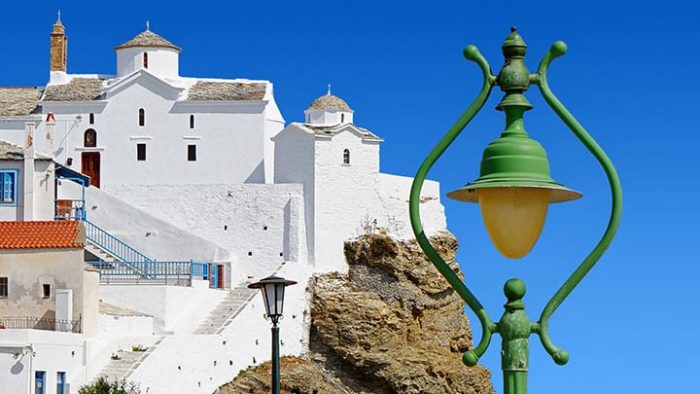
Island Easter at Skiathos, Skopelos, Alonnisos
If you have never been in Greece at Easter, now is the time to plan a holiday in the Northern Sporades. These islands lie off the east coast of mainland Greece, opposite Magnesia and Evia, and in spring they feel Aegean yet greener, calmer and more local.
As a skipper, I always tell guests the same thing. Easter here is not a show for visitors; it is real island life, and for a few days you get to be part of it. You sail in bright mornings, moor in small ports before dusk, then step straight into candlelit streets and church bells.
The holiday begins with Holy Week and ends with Good Friday, the most sacred day, then Saturday, when shortly before midnight people gather in church holding white candles and preparing for the Resurrection of Christ, and Easter Sunday (Pasca), when lamb is prepared on the spit. There is a festive atmosphere everywhere, and people eat and dance, usually late into the night. Greek Orthodox Easter is definitely worth experiencing. It is a celebration that also existed in ancient Greece as a way of welcoming spring, so what you are about to experience is a mix of ancient Greek and Orthodox traditions. Every place has its own festivities. The islands are covered in wild flowers, and the weather is usually sunny and warm, with cool evenings. It is well worth chartering a yacht and experiencing Easter in Greece.
When is Orthodox Easter in Greece?
Dates change every year, so it is worth checking early, especially if you want to match your sailing days with Good Friday and the midnight Resurrection service. Here are the current dates:
Sun, Apr 12 2026
Also, if you are planning to extend your trip into early summer, Agiou Pneymatos is another popular long weekend in Greece and ports can get busy:
Monday, June 1 2026
Where you are going, and why these three islands work so well by boat
Skiathos, Skopelos and Alonnisos are close enough to combine on a short itinerary, but different enough that each stop feels like a new trip. Distances are ideal for relaxed sailing days, and there are plenty of sheltered bays for lunch stops if the afternoon breeze picks up.
Skiathos is the liveliest island and the easiest place to arrive, with an active port and lots of services. Skopelos is greener and more traditional, and the town has that classic amphitheatre feel above the harbour. Alonnisos is quieter and more nature-focused, and it is the gateway to the National Marine Park, where you sail with a little more respect for wildlife and protected zones. For background and official information, you can check the Greek National Tourism Organisation, and for the protected area the National Marine Park of Alonnisos Northern Sporades.
How to reach the Northern Sporades
Most people arrive via Skiathos, since it has an airport and seasonal international flights. If you are coming from Athens or Thessaloniki, you can also travel by road to Volos, Agios Konstantinos or Mantoudi (Evia) and then take a ferry or fast boat to Skiathos and Skopelos. Timetables change with the season and the weather, so check close to your travel dates with the official sources or port announcements.
If you are joining us for a yacht charter, we normally plan the meeting point around the most practical port for your arrival. Sometimes that is Skiathos Town, sometimes another harbour, depending on the boat and the week. If you have luggage and children, tell us early so we can keep things simple. It is a small detail, but it saves stress on day one.
What Easter week feels like on the islands
Holy Week has its own rhythm. Mornings are calm, shops open and people prepare. Evenings become more intense, with services, hymns and processions. Good Friday is the day you will remember. The Epitaphios procession goes through the streets, and in island towns you often see candles everywhere, balconies with lanterns, and a quiet respect that is hard to describe.
On Saturday night, shortly before midnight, churches fill up. You stand outside with your candle, the flame passes from person to person, and after “Christos Anesti” the town wakes up in seconds. Then comes the food: Magiritsa soup late at night, and the next day lamb on the spit, wine and long tables. You do not need to know anyone. On the islands, someone will always say “come sit”, and you end up eating like family.
Sailing conditions in spring
Spring in the Sporades is usually kind. You get many sunny days, cooler evenings and water that is still fresh for swimming unless you are used to the Aegean early in the season. Winds are often lighter than the mid-summer Meltemi patterns, but you can still get brisk northerlies, especially after a front. We plan routes with safe harbours in mind, and we keep distances realistic so you are not rushing to reach port before dark.
Expect quieter anchorages, clearer air and that strong green smell from pine trees after a light rain. The islands are full of wild flowers then, and you will notice it even from the cockpit. One day you are sailing past a cliff that looks like a garden, the next you are walking up a stone alley with jasmine starting to wake up. It is a bit magical, honestly.
What to do in Skiathos, Skopelos and Alonnisos during Easter
The best thing about a yacht at Easter is that you can mix the big moments in town with private time at sea. You are not tied to one village. You can go where the atmosphere feels right that day.
Skiathos
Skiathos Town is busy compared with the other two, even in spring. It is a good place for provisioning, a first dinner out and an easy walk along the waterfront. During Holy Week you will hear bells from different churches and can choose where to attend without needing a car. If you have time for a beach walk, early season is perfect for long empty stretches and photos, even if you do not swim.
For practical travel information from an official source, the Municipality of Skiathos is useful, especially for events and local announcements.
Skopelos
Skopelos Town climbs up the hillside, so it is lovely in the evenings when the lights come on and you look down towards the harbour. Easter services here feel very island-like: narrow streets, candles and the echo of hymns between white houses. If you like walking, this is the island where you naturally do more on foot. Bring shoes with grip because some steps are worn smooth, and yes, a few are slippery when it is humid.
Food-wise, Skopelos does simple tavernas well. You will find plenty of seafood, and during Easter you will also see special sweets and breads. Ask for what locals eat that day, not what is written in English on the menu. You will get a better plate, and usually a smile.
Alonnisos and the Marine Park
Alonnisos is where the pace drops. Patitiri is the main port, and from there you can also go up to the Old Village for views. The big draw for sailors is the National Marine Park. It is a protected area with rules, so we follow the guidelines for anchoring and keep a respectful distance from wildlife. If you are lucky, you may see dolphins, and sometimes monk seal habitat areas are nearby, so we keep noise down and do not chase anything. Nature comes first, always.
If you want to combine sailing with time underwater, the Sporades have interesting seabeds and clear water when conditions are right. For diving and local sea activities, have a look at portoscuba.com and plan ahead, because early-season availability can be limited.
Suggested sailing flow for a Holy Week charter
I avoid publishing a strict itinerary because the weather and port space decide the final plan, and Easter weekends can fill up fast in the popular harbours. Still, the general flow works like this: start from Skiathos for provisioning and an easy first night, then move to Skopelos for one of the key evenings, then spend a quieter day around Alonnisos and the Marine Park for nature and anchorages, and return with flexibility depending on the wind.
We also think about the timing of church services. If you want to attend the Good Friday procession in a specific town, we shape the sailing day around it. That means an earlier departure, a short passage and arriving with enough time to shower and walk in without rushing. Nobody wants to be tying lines while the bells are already ringing.
Timetables, opening hours and routes can change without notice. Always double-check locally before you travel.
Why chartering a yacht makes Easter easier
On land, Easter travel can mean fully booked rooms, limited restaurant seating and driving after midnight services on narrow roads. On a yacht, you have your own base. You eat breakfast with a view, you nap at anchor, and when you go ashore you are there because you want to be, not because you have to find a table.
It also suits mixed groups. Families like the space and routine. Couples like the quiet bays and sunset arrivals. Groups of friends like that you can celebrate without being stuck in one place. Older travellers usually appreciate that we keep the days gentle and avoid unnecessary stress. If someone in the group is not keen on crowds, no problem. We do the main event ashore, then slip back to the boat and it is calm again.
The boats we use are offshore sailing vessels, professionally maintained in excellent condition. All boats have three or more cabins, a fully equipped galley (kitchen), WC with pressurised hot water, auxiliary engine, dinghy (tender) with outboard engine, Bimini top (tent for shade over the cockpit), and all the necessary navigation and safety equipment (by Greek law all touristic professional boats are required to have life rafts for all passengers, VHF radio equipped with DSC system and an EPIRB, fire extinguishers and much more, not to mention very strict boat inspections to make sure every boat is safe).
On board, we do a proper briefing on day one. Where to hold on, how to move safely, how the toilets work and what to expect when we anchor. It takes 15 minutes and makes the whole week smoother, even for people who have sailed before. Weather can change quickly in spring, so we keep a conservative mindset and choose comfort over “pushing it”.
Sea and outdoor activities depend on the weather and your own fitness level. Always follow local safety advice and skipper instructions.
Map of the area
What to pack for an Easter sailing holiday
Pack like a local: layers, not heavy clothes. Days can be warm in the sun, but evenings on the quay get cool, and on the water it feels cooler again. Bring a light jacket, a fleece and something decent for church if you want to attend. Also bring soft bags instead of hard suitcases, because storage on boats is always easier that way.
A small torch helps for walking back to the boat after late services, even if the port is lit. And do not forget a candle protector if you are particular about wax. Some people do not care, some really do. I always have spare napkins onboard, but wax still finds a way.
Food and provisioning tips (simple and realistic)
During Holy Week, you will see more fasting options and seafood dishes in tavernas, then a big shift to meat and celebration after the Resurrection. If you like cooking onboard, we can provision in Skiathos, where the choice is usually best. Fresh bread, tomatoes, feta, olives and a few easy pasta meals cover most lunches. Then you eat ashore for the special nights.
One practical note. Drinking water is easy to buy in packs, but do not assume you can always fill drinking water from the boat tanks. We provide water for washing and cooking, but for drinking you should plan separately, especially with children. If you tell me your habits, I can estimate how many packs you will need so you do not overbuy and carry extra weight for no reason.
Who this trip suits best
- Families who want culture plus easy beach time, without long drives and hotel changes.
- Couples who want a romantic Easter with quiet anchorages and town evenings.
- Groups of friends who like good food, a bit of nightlife in Skiathos and relaxed days at sea.
- Nature lovers who want Alonnisos and the Marine Park, with fewer crowds than in summer.
- People who have “done Greece” in July and want a different, more authentic feel.
What is included and what is not
Prices include:
- boat fees
- skipper fees
- fuel
- cooking LPG
- water (not for drinking)
- marina and port fees*
- electricity
- VAT
- one set of clean sheets, pillowcase and bathroom towel per person
- dinghy outboard use
Not included
- food and beverages
- drinking water
- dinghy outboard fuel
- skipper’s food and beverages
- other consumables such as toilet paper, kitchen paper, coffee, sugar, etc.
A few local skipper notes that make the week smoother
Ports at Easter can be surprisingly busy, even in spring. Many Greeks travel for the holiday, and if the weather is nice, boats move too. We aim to arrive earlier in the afternoon when possible, and we keep a Plan B harbour in mind. Sometimes the best night is not the main port, but the quiet one next door where you sleep like a baby.
If you want to attend a specific church service, tell me which one matters most to you: the Good Friday procession, the Resurrection at midnight, or Easter Sunday lunch. Then we build the sailing around that. It is easy to do if we know early, and a pain if we find out at the last minute. Small typo here, but you get it.
Local crew, local mindset
Our local team of skippers, travel agents and scuba instructors with over 20 years of experience in Halkidiki is here to help you.
Soft planning help and booking
If you are thinking about Easter in the Sporades, send your dates and group size and we will suggest the best starting port and a realistic route for the week. If you want more sailing, we add miles. If you want more time ashore for the services and food, we slow it down.
If you’d like to explore the coast, ask us about day trips at sea and sailing boat options.
call us: +306980700070
send a message via WhatsApp
call or text us on Viber
send a message via Messenger
Don’t forget to mention:
- Number of persons, possible dates
- The hotel you’ll be staying
- The activity you are interested in