


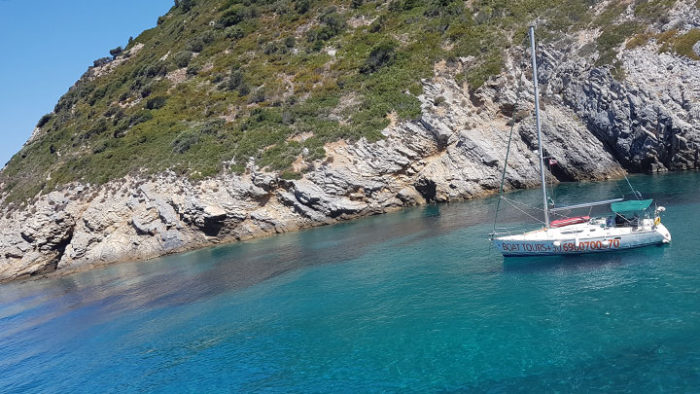
Sailing holidays to the Saronic Gulf islands – Aegina, Poros, Ydra, Spetses
If you’re looking for a sailing holiday that combines stunning scenery, crystal-clear water and charming seaside towns, the Saronic Gulf islands of Greece are an excellent choice. Aegina, Poros, Ydra and Spetses are some of the gems you’ll visit on a cruise here.
From a skipper’s point of view, this is one of the easiest places in Greece to fall in love with. You are close to Athens, hops between islands are short, and you can mix lively harbours with quiet anchorages without feeling rushed.
The Saronic is also forgiving: protected waters, plenty of shelter and ports used to yachts make it ideal for first-time crews, families and groups who want a relaxed pace. At the same time, there is enough variety in wind and coastline to keep experienced sailors happy.
The Peloponnese, in Argolis, was once linked to Attica by the Isthmus of Corinth and now associates with the channel. Between the Peloponnese and Attica a sea formed that is now called the Saronic Gulf, the most famous and widespread sailing area in Greece near Athens. In this area are the islands of Aegina, Poros and Agistri in the southern part. The second area, south of Poros, is Argolikos Bay, which includes Hydra and Spetses among other smaller islands.
Geographically, you’re sailing in the pocket of sea between Attica and the north‑east Peloponnese. That means easy access from Athens and Piraeus, and also from the Corinth Canal if you come from the Ionian side. For a quick overview of the region and its islands, Wikipedia is a useful starting point: https://en.wikipedia.org/wiki/Saronic_Gulf.
- Agistri, with crystal beaches
- Resort island of Aegina, with picturesque villages and famous curative baths
- Methana
- Poros, with unique natural beauty and good tourist infrastructure
- Historic Salamis with dramatic landscapes
- Spetses, an unparalleled and elegant island
- The cosmopolitan island of Hydra, declared a natural and historical monument, completes the glamorous image of the Saronic Gulf islands
Getting to the area is straightforward. Most crews start from marinas and ports in the Athens area, usually around Piraeus, Alimos or Lavrio depending on the boat and the plan. You can also arrive by ferry to Aegina, Poros, Hydra or Spetses and meet your yacht there if you’ve arranged a skippered pick-up. Start times and port formalities change with traffic, season and weather, so keep a little flexibility on day one.
Timetables, opening hours and routes can change without notice. Always double-check locally before you travel.
During summer the Meltemi is the typical wind in this area. Along the mainland coast from the Corinth Canal to Cape Sounion, and in the stretch between Methana and Attica, it can blow Force 4–6 from NNE–NE. The winds are usually lighter near the Methana peninsula and Poros, while near Cape Sounion they may be stronger.
In practice, that means you can plan comfortable day sails with a morning coffee and still be tied up for sunset. In July and August I brief crews to expect gusts funnelled between headlands and some chop if the breeze aligns with the channel. For a reliable forecast before you cast off, locals check the HNMS forecast: https://www.hnms.gr/en/.
Seasonal feel matters here. May and June are my favourites for clear water and calmer harbours. July and August bring the buzz, full tavernas and more rafting in popular ports such as Hydra town. September stays warm with softer light and quieter nights. Around Orthodox Easter the islands feel more local and traditional, with church bells, family tables and that special spring smell in the pines. If you are planning around it, check the dates here:
Sun, Apr 12 2026
.Aegina & Agistri Island
Approximately 18 nautical miles from Attica, Aegina is often the first or last stop on Saronic day cruises. Many of the island’s 10,000 inhabitants work in Athens and commute daily by boat. The island was once very fertile but lost many of its trees, keeping mainly the famous peanut trees. A newly constructed reservoir has helped protect the island’s natural beauty.
Aegina is a practical first night: it is close, offers services and gives everyone time to settle aboard. For crews arriving on late flights this is the easiest way to get a first swim and a proper dinner without pushing too far. The main town waterfront is lively and you can stock up on basics before heading to quieter corners.
The port of Agia Marina is on Aegina’s east side and is exceptionally beautiful. It is one of the most famous resorts in the Saronic Gulf. Pine forests sweep down to the clear waters of Agia Marina bay, creating a coastline of superb beaches and coves. Agia Marina also has archaeological interest, notably the Temple of Aphaia.
If you like mixing sailing with culture, the Temple of Aphaia is one of the best half‑day trips in the gulf. It sits high above the sea, so visit earlier or later in the day for better views and cooler air. For background, the official culture portal is helpful: https://odysseus.culture.gr/. On the water, Agia Marina can be busy in peak season, but it remains a great stop for a beach day, especially with children who want easy sand and shallow entry.
Agia Marina suits long summer stays as well as weekend getaways. Beyond the antiquities, visitors will find many lovely beaches and seaside villages amid lush landscapes.
South of Aegina town in the island’s west lies the seaside village of Marathon and, further down, the beautiful fishing village of Perdika. From there you can visit Agistri and Moni. If you are in Perdika at lunchtime you can expect excellent fresh fish — some say the best on the island.
Agistri is about 55 minutes from Piraeus and close to Aegina. It is a small paradise of pine trees reaching down to blue waters.
Perdika is one of those places that fits a skipper’s routine perfectly: easy strolls, proper tavernas and simple tender rides for nearby swim stops. If you enjoy snorkelling, bring a mask — water clarity around the small islets is often excellent outside busy weekends.
Agistri has two natural harbours, Skala and Megalochori. The island offers peaceful summer holidays and relaxed weekends, with green pines, sandy beaches, clear water and a nightlife for those who want it.
Agistri suits couples and groups who want an easy‑going night: anchor for a calm swim, then go ashore for a simple meal and a late drink without the high‑gloss vibe of more cosmopolitan islands. It is also gentle for older family members — short walks and few steep climbs unless you choose them.
Known for its breathtaking sunsets, Aegina is the largest of the Saronic Gulf islands and boasts a rich history, including a 5th‑century BC temple dedicated to Athena. Aegina town has a lively waterfront promenade, narrow streets of shops and cafés, and a picturesque fishing port.
Poros
Poros, about 35.5 nautical miles from Piraeus, attracts many visitors each summer. It offers beautiful beaches, quaint houses and pine‑clad hills. The island is volcanic and formed by the joining of two earlier islands.
Poros is an excellent base because it gives you options: stay in town for nightlife and supplies, or slip into quieter bays nearby when you want silence and cicadas. The channel between Poros and the Peloponnese is a sheltered run when winds outside are stronger, so it is a handy safety option.
Located close to the Argolid, the island is separated from the mainland by a very narrow channel. It is embraced by a beautiful pine forest. The island is divided in two by a canal: the larger part (the old Kalafreia) rises to about 390 metres, while the smaller volcanic part is where the town sits.
The Charter Yacht Show takes place on the island every spring, attracting many visitors, yachts and events.
In spring the island feels like it’s waking up. The water is still cool, anchorages are calm and berths are easier to find. It’s a good time for walking in the pines before the heat sets in. Some years the Holy Spirit holiday brings Greek weekend crowds, so plan berths ahead if you sail then.
Monday, June 1 2026
The hospitality of the locals and Poros’s lush greenery make it a pleasant base for exploring the Argolic coast, including the Lemon Forest and the ruins of Trizinia, Epidaurus, Tiryns and Mycenae. From Poros you can also take day trips to the Temple of Poseidon, built in the 6th century BC, and the Monastery of the Life‑Giving Fountain.
Poros is also good when part of your group wants a land day. You can leave the boat secure and do a short excursion to the Peloponnese for history and food. In high summer, start early: the midday sun is strong and the streets can get busy.
Visitors will find many cafés, bars and restaurants. The island has two large beaches, Askeli and Neoreia, plus many smaller coves. With its pine‑covered hills, turquoise waters and neoclassical architecture, Poros is postcard‑perfect.
The charming town of Poros features a vibrant harbour where you can enjoy fresh seafood, local wine and warm Greek hospitality. Be sure to visit the clock tower for stunning views over the island and sea.
Ydra
As you approach the port of Hydra you will be captivated by the island’s picture‑perfect landscape. This is one reason why Hydra is an ideal resort for a short or longer holiday. Hydra, located in the southern Argosaronic Islands and very close to Athens, is a unique destination even for a two‑day getaway.
Hydra is the island I take people to when they want that “wow” arrival. The amphitheatre harbour, the stone mansions and the boats lined up create a classic Greek sailing postcard. It is one of the few places where even non‑sailors start taking photos as you enter.
Hydra has around 2,300 inhabitants and no cars are allowed on the island. It is very picturesque, with a strong maritime history reflected in restored mansions, the old port with battlements and cannons, museums, monasteries and the naval academy.
Because there are no cars, everything feels closer and calmer even when it’s busy — you hear footsteps, donkeys and the sea. For families this can be a relief, but watch little ones near the quays, especially in the main harbour where there is activity and lines.
Sea and outdoor activities depend on the weather and your own fitness level. Always follow local safety advice and skipper instructions.
The town of Hydra, the island’s only town, has been declared a preserved monument. It stretches over two rocky hills and is made up of traditional houses with tiled roofs, dark blue doors and windows, and flowered courtyards.
If you want a picturesque, traditional but cosmopolitan and lively resort, visit Hydra for an unforgettable experience. The island is noted for dense vegetation around the shores and crystal‑clear waters. Topography varies from beach to beach — you’ll find sandy bays, pebbly coves and rocky points for diving into deep, refreshing water.
Starting from Hydra town’s south side, beaches include Mandraki, Spilia, Hydronetta, Avlaki, Vlihos, Palamidas, Molos and Bistis; on the south‑east side you’ll find Agios Nikolaos, Nisizas and Limionizas.
One of Greece’s most picturesque islands, Ydra is a car‑free haven where donkeys remain a common mode of transport. The town’s neoclassical architecture, narrow alleys and whitewashed houses with red‑tiled roofs make the harbour a popular spot for yachts, with plenty of waterfront cafés and tavernas.
Hydra suits couples, photographers and anyone who enjoys lively evenings. It is less ideal if you want long sandy beaches every day, as many swim spots are rocky with deep water — perfect for strong swimmers and snorkellers. For practical info, the municipality page is a good reference: https://www.hydra.gr/.
Spetses
This small, green island full of pretty churches offers a pleasing contrast with its neighbours. Good transport links have made it a destination for visitors heading west to Epidaurus and Athens, or east to the central Cyclades.
Spetses sits at the entrance to the Argolic Gulf, close to the Peloponnese coast, and feels a little more “grand” in style: elegant houses, horse carriages and an evening‑alive waterfront. If your crew wants a touch of luxury without losing the island atmosphere, this is the stop.
The island’s proximity to the capital, pleasant summer climate and cheerful atmosphere have made it a favourite of Athenians who appreciate Spetses’s luxury and splendour. The island has impressive historical and architectural treasures.
Dapia square, with harbour cannons, commemorates figures from 1821, and the Bouboulina mansion is now a museum of precious relics. The Museum of Spetses, housed in the Chatzigianni Mexi mansion, displays artefacts from the Greek Revolution.
Each September the Armata Festival takes place: a ceremonial burning of a boat in the old harbour with fireworks, honouring the Greek revolution against the Turks.
If you sail in September, Armata is a major event. Expect crowds, limited berths and a lively, late celebration. It is a memorable spectacle if you enjoy local tradition, but plan ahead and keep a backup anchorage in mind. Afternoon breezes can also pick up, so arriving early is often easiest.
On Spetses you can admire traditional houses, walk on paved squares with busts of historical figures, visit the clock tower and white churches. The Old Harbour is romantic, and the lighthouse adds to the sense of another era.
With elegant mansions, fragrant pine forests and sparkling seas, Spetses is a Saronic jewel. The main town offers a charming harbour, narrow streets and a lively waterfront promenade, plus several lovely beaches for swimming and sunbathing.
Sailing in the Saronic Gulf is a dream for sailors and non‑sailors alike. Calm waters, sheltered anchorages and easy navigation make it perfect for novice crews to gain experience, while experienced sailors enjoy varied conditions and the chance to explore some of Greece’s most beautiful islands.
On board, I always advise short legs: two to four hours of sailing, then a swim stop and a harbour walk. It keeps everyone content, especially mixed groups where some love sailing and others prefer the sea and food. If diving and snorkelling are part of your plan, have a look at portoscuba.com for local sea activities and conditions to help decide what kit to bring.
Our local team of skippers, travel agents and scuba instructors with over 20 years of experience in Halkidiki is here to help you.
If you want to turn this into a proper holiday plan, we can suggest a route based on your crew and the week you travel. Families usually choose sheltered bays and earlier evenings. Couples often prefer Hydra and Spetses nights. Groups of friends tend to mix late dinners with longer swim stops.
If you’d like to explore the coast, ask us about day trips at sea and sailing boat options.
Whether you’re after a romantic escape, a family holiday or an adventure with friends, a sailing trip in the Saronic Gulf islands is likely to be unforgettable. Contact us to learn more about our sailing holiday options in this beautiful part of Greece.
Not sure where to start? Contact our local travel agency for friendly, personalised advice, seasonal offers and travel options.
call us: +306980700070
send a message via WhatsApp
call or text us on Viber
send a message via Messenger
Don’t forget to mention:
- Number of persons, possible dates
- The hotel you’ll be staying
- The activity you are interested in